Blog entry

Blog entry

The definitive Drum Machine playlist

The definitive list of drum machine tracks (give or take)

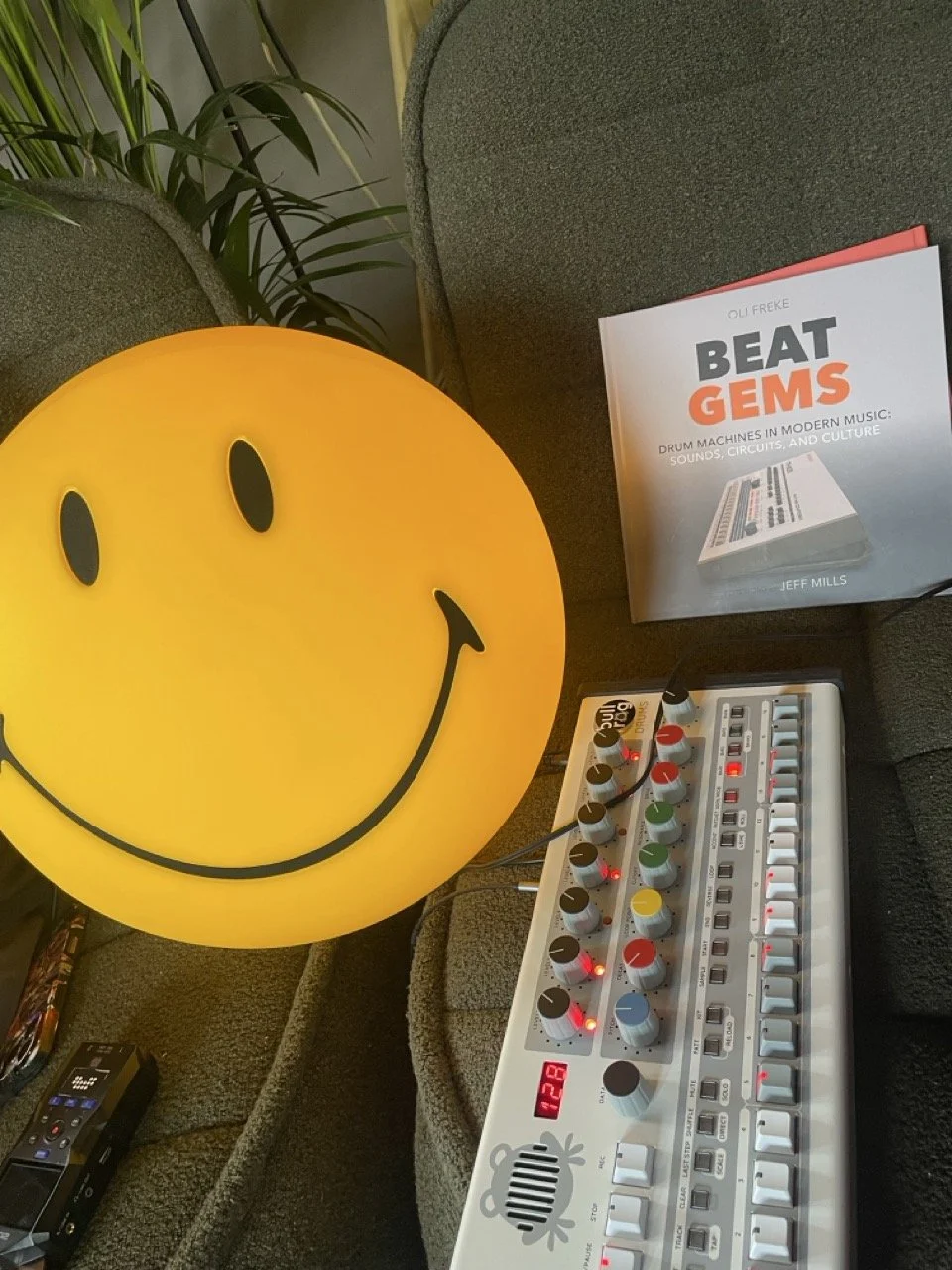
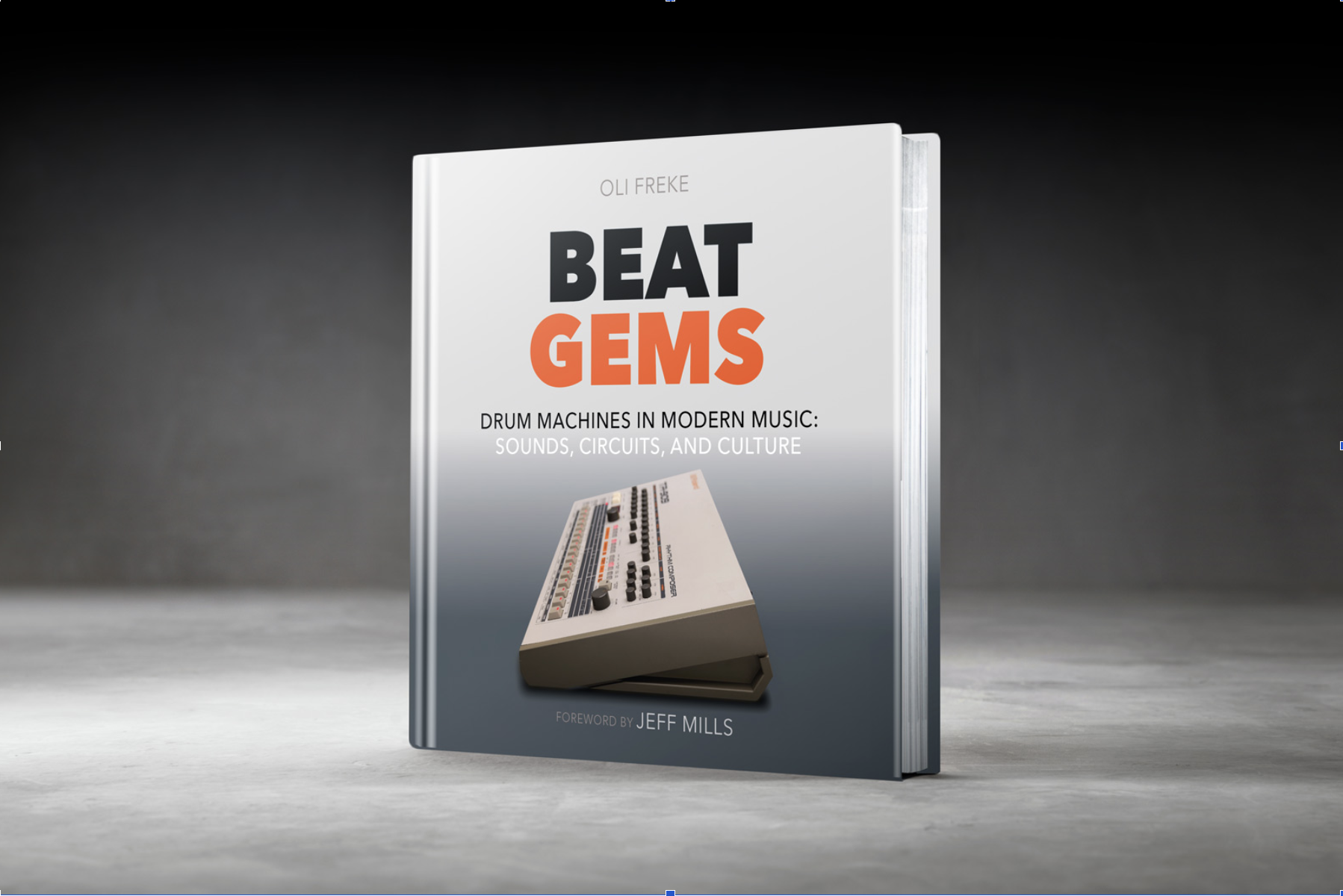
My book BEAT GEMS references many great tracks that were notable for the use of drum machines, and I thought it would be a good idea to gather them up into a Spotify playlist with an accompanying blog post to discuss them.

Of course, there have been many thousands of records made with drum machines since the 1960s so it cannot possibly cover the entire range, but I think this is a good representative selection: usually the earliest songs to use a particuarly significant drum machine or to use them in particularly interesting ways.

It’s organised in chronological order of song release, making for an interesting development in music genre and style. I also think it has to be said that most of these tracks are absolutely brilliant and makes for an extremely joyful listening experience, regardless of drum machine use!

Happy to hear of examples not included in the comments for possible inclusion!

And here are the accompanying reading notes, just like the old days when we’d read an LP’s liner notes while listening to our new prized record. Preferably in a comfy chair with jam on toast and coffee. I encourage you to do the same!

SONG LIST with notes

The United States of America, Garden of Earthly Delights (1968). [Customised drums and effects]
Psychedelic experimentation, with electronic percussion homemade by drummer Craig Woodson - piezo-triggered sounds from an acoustic drum kit. An example of how experimental bands and musicians were dabbling in artificial percussion at this time.
-

Dick Hyman, The Minotaur (8 min version) (1969). [Maestro Rhythm Master]
An eight-minute Moog-fuelled electronic odyssey, with wild, swooping synthesizer solos, octave-spanning glissandos in the psychedelic vein. A drum machine provides the unusual, loping rhythm, reportedly combining waltz and bossa nova patterns. An early and influential combination of electronic percussion and synth improvisation.
-

Robin Gibb, Saved By The Bell (1969). [Ace Tone FR-1]
One of the earliest hits to feature a drum machine (the Ace Tone FR-1), reaching No.2 in the UK charts in 1969. Robin Gibb was on sabbatical from the Bee Gees at the time.
-

Little Sister, Somebody's Watching You (1970). [Maestro Rhythm King]
Sly Stone's record label, Stone Flower, released tracks such as this one by Little Sister, which featured his younger sister, Vet Stone.
-

Can, Peking-O (1971). [Unknown drum machine]
Drum machine starts around 2:35. A theme of Beat Gems is represented here - the 'misuse' of the drum machine by not limiting its use to 'simple rhythm accompaniment'. For example, setting the tempo to maximum (around 5:00), and stop/starting for musical effects.
-

Jimi Hendrix, Sweet Angel (Angel) (1971). [Prob. an Ace Tone FR-1]
This rare demo from the 'South Saturn Delta' sessions sees Hendrix use a drum machine for a temporary rhythm track. These early preset machines were often used as a more interesting metronome in recording sessions or for demos, but they didn't usually make it to the final release.
-

Moody Blues, Procession (1971). [Home-made drum kit]
An early electronic drum system using rubber pads. This set was custom-built by drummer Graeme Edge with Sussex University electronics professor Brian Groves. Featuring touch-sensitive rubber pads that triggered electronically generated sounds, the transistor-based system included five snares, ten tom-toms, a pedal-operated octave of bass drums and multiple sequencers. An ambitious, if somewhat temperamental, precursor to the modern electronic drum kit.
-

JJ Cale, Crazy Mama (1972). [Ace Tone Rhythm Ace (unit unknown)]
An early and tasteful use of a drum machine in rock music. Cale used an Ace Tone Rhythm Ace for the rhythm on 'Crazy Mama' and 'Call Me the Breeze', largely out of financial necessity. Leon Russell was involved with JJ Cale's early career and when he worked with Roger Linn later, brought his interest in drum machines with him...possibly inspiring Mr Linn and his subsequent revolutions in drum machine development!
-

Kingdom Come, Spirit of Joy (1972). [Bentley Rhythm Ace]
An early rock band to dispense with a drummer and to use a rhythm machine instead, in the studio and on tour.
-

Sly & Family Stone, Family Affair (1972). [Maestro Rhythm King MRK-2]
Sly called his Maestro Rhythm King his 'Funk Box', and this may be one of the earliest global hits to be built around a drum machine. Sly exploits the rigidity of the drum machine to weave his fluid bass playing around - man / machine!
-

Timmy Thomas, Why Can't We Live Together (1972). [Lowrey Organ with AR-4 Automatic Rhythm]
Thomas used the built-in rhythm accompaniment on his Lowrey Organ for this influential, leftfield soul classic.
-

ELP, Toccata (Brain Salad Surgery) (1973). [Home-made drum kit]
Carl Palmer has claimed this as the first electronically generated drum solo on a commercial recording, using pick-ups in his acoustic kit drums triggering synths; the wild electronic tones from around 5:00 have been mistaken for Emerson's synths - but they're drum triggered!
-

Bob Marley and the Wailers, So Jah S'eh (1974). [Prob. Maestro Rhythm King]
This is arguably one of the earliest reggae tracks to use a drum machine - along with other recordings at this time, notably No Woman No Cry.
-

Bob Marley and the Wailers, No Woman No Cry (1974). [Prob. Maestro Rhythm King]
How did I never notice this was a drum machine before?
-

Brian Eno, The Great Pretender (1974). [Bentley Rhythm Ace (prob.)]
Prominent preset machine; and nice prepared piano too!
-

Cluster, Caramel (1974). [Elka Drummer One]
Cluster were a prominent krautrock group of the mid-70s - the 'most important rock band in the world' according to Brian Eno at the time, and used an Elka Drummer One heavily processed with effects to create more textured rhythms.
-

George Macrae, Rock Your Baby (1974). [Roland TR-77]
A soul classic that uses a Roland TR-77 - the first product that the newly founded Roland released.
-

Harmonia, Dino (1974). [Elka Drummer One]
The krautrock 'supergroup' of Cluster (Hans-Joachim Roedelius and Dieter Moebius) with Michael Rother of Neu! making great use of a drum machine.
-

Kraftwerk, Autobahn (1974). [Farfisa Rhythm 10]
Wolfgang Flür rigged up his Farfisa Rhythm 10 so that the individual drum sounds could be triggered by his famous homemade electronic drum pad system.
-

Parliament, The Goose (1974). [Unidentified drum machine]
Another great funk group to make prominent use of a drum machine, overlaid with acoustic drums and percussion.
-

Jean-Michel Jarre, Oxygene IV (1976). [Keio Mini Pops 7]
The Keio MP-7 brings its unique percussion sounds - quijada anyone? - to the emerging genre of popular electronic music, lending Jarre's classic its distinctive rhythmic sound world.
-

Carly Simon, Nobody Does It Better (1977). [Pollard SynDrum]
Arguably the first recording to feature the Pollard Syndrum (for the tom fills); played by legendary drummer Jeff Porcaro.
-

Iggy Pop, Night Clubbing (1977). [Roland CR-78]
Co-written by David Bowie, the Roland CR-78 is processed through effects to give a darker character. Its mechanical pulse, combined with the sparse bass and guitar, is fundamental to the track's distinctive, minimalist atmosphere. Bowie wanted to re-record it with real drums - but Iggy disagreed...
-

The Congos, Congoman (1977). [Roland CR-78]
Produced by Lee 'Scratch' Perry, another great reggae track to use a drum machine (the Roland CR-78). The better known classic 'Fisherman' is on this album.
-

Ultravox, Hiroshima Mon Amour (1977). [Roland TR-77]
The Roland TR-77 was Roland's first product, and built on the experience that founder Ikutaro Kakehashi had built up at Ace Tone over the previous decade. Ultravox's Warren Cann manipulated the unit's controls in realtime to overcome the limitations of the preset nature of the built-in rhythms.
-

Blondie, Heart of Glass (1978). [Roland CR-78]
The opening famously used the CR-78 with the beguine & mambo buttons pressed down to combine the rhythms, and Jimmy Destri's Roland SH-5 sync'd to it for the bassline.
-

Echo and the Bunnymen, Pictures on the Wall (1979). [Korg Minipops]
The original three-piece line-up used a drum machine they nicknamed 'Echo', which also gave the band its name. Its mechanical pulse provides the rhythmic foundation for this atmospheric debut single, recorded before Pete de Freitas joined as drummer. The machine was reportedly painted fluorescent green, but was later stolen from the band's Liverpool rehearsal space.
-

Roxy Music, Dance Away (1979). [Roland CR-78*]
Bryan Ferry originally developed this song around a rhythm box, having unsuccessfully attempted to record it for two earlier solo albums. The simple, mechanical pulse provided the foundation for the eventual Roxy Music hit, with the other instrumentation added around it.
*The precise model attribution remains to be confirmed as Dan LeRoy’s well research book says CR-78, but this blog says TR-66. I’m going with the researched book, not the unattributed blog claim!
-

Sparks, No. 1 in Heaven (1979). [Drum synth unknown]
Sparks illustrating the popularity of the disco 'pew-pew' tom sound of the disco era in the introduction of this great track.
-

Blondie, Atomic (1980). [Roland CR-78]
Prominent use of the CR-78, especially in the middle-8. Note the 'metal beat' sound - arguably the first synthetic drum sound on a drum machine - ie, not trying to imitate an acoustic drum in the real world.
-

Genesis, Duchess (1980). [Roland CR-78]
The first prominent use of a drum machine on a Genesis recording, and is combined with Phil Collins drumming on an acoustic kit.
-

Paul McCartney, Secret Friend (1980). [Unknown]
McCartney in experimental mode: an extended electronic excursion from the McCartney II sessions, built up by McCartney alone using synthesizers, drum machines, effects and tape.
-

Peter Gabriel, Biko (1980). [PAiA Programmable Drum Set]
Probably the first widely heard song to use a programmable drum machine - the PAiA Programmable Drum Set. A basic DIY machine, it nevertheless provides the distinctive high bongo sound throughout the song.
-

Steely Dan, Hey Nineteen (1980). [Wendel - COMPAL-80 mini-computer]
An early example of sampled drum sounds, generated by a COMPAL-80 computer running custom software. Dubbed the Wendel, the system was built by Roger Nichols, the legendary recording engineer and hardware designer. Steely Dan were notorious perfectionists and the Wendel enabled them to place drums with ultimate precision - taking two years in the process to make this album.
-

Steve Winwood, Spanish Dancer (1980). [Linn LM-1]
An early song to feature the Linn LM-1 - the first commercial drum machine to feature samples instead of analogue sounds. Steve Winwood combines the LM-1's sounds with acoustic drums and sequenced synthesiser rhythms to create this gently disco-inflected groove.
-

Trio, Da Da Da (1980). [Casio VL-1]
A track that shows that cheap kit (a Casio VL-1), a good tune, and a sense of humour can take you a long way!
-

Ultravox, Astrodyne (1980). [Star Instruments Synare & CR-78]
Opens with the CR-78's distinctive Metal Beat sound; though the machine is overlaid with acoustic drums subsequently. Illustrates how synthpop/new wave bands embraced the newly programmable options offered by the CR-78 - the first widely available, good sounding, programmable drum machine. See also John Foxx's Metamatic album.
-

Davy DMX, One For The Treble (1981). [Oberheim DMX]
An early hip-hop/electro showcase for the Oberheim DMX, the drum machine from which Davy Reeves took his adopted name.
-

Depeche Mode, Dreaming of Me (1981). [Korg KR-55]
Check out the Korg KR-55's beautiful (analogue) snare drum on this synthpop classic. (The kick is an ARP 2600 synthesizer as producer Daniel Miller did not rate the machine's own bass drum).
-

Elton John, Nobody Wins (1981). [Linn LM-1]
Roger Linn has been quoted as saying that this is how his new machine should be used - to sound like a real drummer is playing. No surprise in this case, then, that it's legendary drummer Jeff Porcaro who programmed the Linn LM-1.
-

George Benson, Turn Your Love Around (1981). [Linn LM-1]
Another early Linn LM-1 hit. Programmed by Jeff Porcaro (again!), they tried replacing the LM-1 temp track, but it simply wasn't as good. This represents the start of the era that drum machines were considered good enough to carry a whole song without a drummer and acoustic drum kit.
-

Hall & Oates, I Can't Go For That (No Can Do) (1981). [Roland CR-78]
Built around the Roland CR-78's Rock 1 preset which provided the starting point for Daryl Hall's bassline and the song's distinctive groove. They tried replacing with acoustic drums, but it sounded too 'heavy'. Michael Jackson cited this song as an inspiration for the Billie Jean groove.
-

Kraftwerk, Pocket Calculator (1981). [Mattel Bee Gees]
Not strictly a drum sound, this one: the Mattel Bee Gees toy keyboard provided the lead line, with Florian Schneider performing on it live and even inviting audience participation. The machine's three basic rhythms, however, weren't used at all.
-

Phil Collins, In The Air Tonight (1981). [Roland CR-78]
A classic song that brought the CR-78 to a wide audience - before its delicate ticking is comprehensively demolished by a completely unnecessary drum fill. (Thanks Phil!)
-

Soft Cell, Tainted Love (1981). [Roland CR-68]
The CR-68 provides the basic groove. Engineer Paul Hardiman managed to separate kick and snare for independent processing, while an EHX Crash Pad and Star Instruments Synare provide the triplet zaps and other effects.
-

Spandau Ballet, Chant No. 1 (1981). [Simmons SDSV]
One of the earliest hits to feature the distinctive hexagonal drum pads of the Simmons SDSV - and its equally distinctive electro tom sound.
-

The Human League, Don't You Want Me (1981). [Linn LM-1]
A huge synthpop classic that used the LM-1, but note the lack of crash and ride cymbals; digital memory was too expensive for the machine to include these long sounds.
-

Afrika Bambaataa, Planet Rock (1982). [Roland TR-808]
The first genre the Roland TR-808 was centered around was electro, and this was the track that kicked it all off. A blend of Kraftwerk-inspired beats and riffs with vocoded vocals and the orchestral stabs that set the framework for the style.
-

Marvin Gaye, Sexual Healing (1982). [Roland TR-808]
Recorded in Belgium while Marvin Gaye was on a sabbatical, this is a definitive TR-808 song, setting the tone for the 808's soulful side. Gaye's credited in the sleeve notes as playing the conga, bells, and cymbals - the drum sounds on the machine.
-

Patrice Rushen, Forget Me Nots (1982). [Human hand-claps]
The hand-clap unit was a common stand-alone piece of hardware in the late 70s and early 80s - reflecting its popularity in disco tracks., but interestingly this track processes human handclaps to sound electronic. This track by Patrice Rushen was sampled by Will Smith for 'The Men in Black' in 1997.
-

Prince, 1999 (1982). [Linn LM-1]
Prince is synonymous with the Linn LM-1, at least in this 1980s phase, and was used across multiple tracks. Roger Linn once referred to him as his 'marketing department', such was Prince's public admiration for the machine.
-

Sisters of Mercy, Adrenochrome (1982). [BOSS DR-55]
The Sisters of Mercy are well known for their use of a drum machine in place of a human drummer, and that they have always referred to it as ‘Doktor Avalanche’. In this case, their earliest work used a BOSS DR-55, but subequently used Oberheim DMX, Roland TR-808, and more.

-

Big Black, I’m a Mess (1983) [Roland TR-606]
Legendary producer Steve Albini loved his TR-606 and his band Big Black used it live as well as on recordings such as this one. From a gig at CBGB, New York in 1986, this memorable exchange: Steve: ‘I’m sorry to report that our drum machine just blew up. Audience heckler: ‘get a real drummer’. Steve: ‘Drummers get drunk’.

-

Billy Idol, Eyes Without a Face (1983). [LinnDrum]
Keith Forsey programmed the LinnDrum, and overlaid live drums. The LinnDrum became a central sound to Rebel Yell, and a good example of drum machines crossing over into mainstream rock.
-

Genesis, Mama (1983). [Linn LM-1]
Programmed by Mike Rutherford a great example of drum machines crossing over into mainstream rock and being used creatively.
-

Herbie Hancock, Rockit (1983). [Oberheim DMX]
A classic electro track by jazz-funk maestro Herbie Hancock, using an Oberheim DMX.
-

New Order, Blue Monday (1983). [Oberheim DMX]
One of the most famous drum machine patterns of all time - that kick drum roll was actually inspired by the chorus in Donna Summer's 'Our Love'.
-

S.O.S. Band, Just Be Good To Me (1983). [Roland TR-808]
The 808 comes to R&B, courtesy of producers Jam & Lewis.
-

The Eurythmics, Sweet Dreams (1983). [Movement Percussion Computer]
Using the esoteric Movement Percussion Computer, the machine wouldn't put the 'boom' (low tom) on beat two where Dave Stewart wanted it. So it's on beat one, where it sounds great. The machine contributing to the art though accident!
-

ZZ Top, Sharp Dressed Man (1983). [Prob. Oberheim DMX]
Other styles beyond dance and pop started to rely on the drum machine - here is ZZ Top's take, an archetypal rock band.
-

Don Henley, The Boys of Summer (1984). [LinnDrum]
The LinnDrum establishes itself in rock music, and is one of the defining LinnDrum songs of the decade.
-

Egyptian Lover, Egypt, Egypt (1984). [TR-808]
The 808's cowbell was a cornerstone sound of 80s electro, later to become something of a comical cliché ('needs more cowbell').
-

Run DMC, Sucker MCs (1984). [Oberheim DMX]
Classic use of the Oberheim DMX in 80s hip-hop, where it was highly prized. 'It's Like That' was the B-side - a hip-hop classic.
-

Skinny Puppy, Smothered Hope (1984). [Roland TR-909]
One of the earliest Roland TR-909 records; even before it became 'the techno drum machine' - but like techno, Skinny Puppy found that distorting and processing the kick was a rewarding practice.
-

Strike, U Sure Do (1984). [Roland CR-78]
A techno-house track extolling the virtues of the drum machine and the CR-78.
-

T La Rock, It’s Yours (1984). [Roland TR-808]
Produced by Rick Rubin, this one of the earliest hip-hop tracks to exploit the boom of the 808’s bass drum. The extended decay control and subsequent deep sine bass of the 808 formed the basis of many genres from hip-hop to trap and Miami bass to funk carioca.

-

A-Ha, Take On Me (1985). [LinnDrum]
A-ha's Paul Waaktaar-Savoy programmed the LinnDrum for this global hit. An earlier version of the song was written on a Fairlight - but it wasn't liked by the band, which led to this definitive version and defining 80s pop record.
-

Tom Petty and the Heartbreakers, Don't Come Around Here No More (1985). [Oberheim DMX]
This song was written by Dave Stewart (The Eurythmics) around a distinctive Oberheim DMX pattern, bass synth and electric sitar. Originally intended for Stevie Nicks, it eventually landed with Tom Petty.
-

Wayne Smith, Under Mi Sleng Teng (1985). [Casio MT-40]
A breakthrough riddim built around the drums and auto-accompaniment pattern of the Casio MT-40 home-keyboard, and is credited with the start of the digital reggae era. The preset itself was programmed by Okuda Hiroko who was in her first year at Casio. Cultural exchange at its best!
-

Mantronix, Bassline (1986). [Roland TR-909]
Predating DJ Pierre's breakthrough 'Acid Tracks', this track makes effective use of the TR-909's shuffle function alongside the unmistakable squelch of the TB-303.

-

Adonis, No Way Back (1987). [Roland TR-808]
Chicago House pioneer Adonis gives the 808 a solid work out, reflecting its status at the heart of the underground club sound.
-

Steve 'Silk' Hurley, Jack Your Body (1987). [Roland TR-808]
Landmark house track built around the TR-808. An underground hit in Chicago, it failed to make the US Billboard Hot 100. However, it reached No. 1 in the UK, bringing Chicago house to mainstream attention and helping build towards the acid-house, rave and dance revolution to follow.
-

Rick Astley, Never Gonna Give You Up (1987). [Linn 9000]
Produced by Stock, Aitken and Waterman on their beloved Linn 9000. They used it for years after they could have migrated to their computer-based studio, which given how buggy and prone to crashes the Linn 9000 was notorious for (and which led to the collapse of Linn Instruments in 1986).
-

HEALTH, Godflesh, SICKO feat. Godflesh (1988). [Alesis HR-16]
Godflesh are well known for their use of Alesis HR-16 for drums. Unusual for a heavy metal/industrial band!
-

Public Enemy, Don't Believe the Hype (1988). [E-mu SP-1200)
The sampling drum machines ushered in a new phase of hip-hop. The gritty sounds of the E-mu SP-12 and SP-1200 were two of the key machines used by many prominent artists, giving this phase of hip-hop its distinctive sound.
-

Technotronic, Pump Up the Jam (1989). [Roland TR-909]
The underground dance scene of techno and house discovered the TR-909 - it wasn’t long before the mainstream exploited it in pop-dance crossover tracks.
-

Carter USM, A Perfect Day to Drop the Bomb (1990). [Yamaha RX15]
A song on the band's 101 Damnations album that features a Yamaha RX15 databurst at the start, as well as relying on the machine for the drum track. Carter USM were one of the few 90s indie bands to exclusively use drum machines, not drummers.
-

Madonna, Vogue (1990). [Roland TR-909]
A fine pop song to make great use of the 909, which was commonly heard in crossover / pop-dance hits of the era.
-

Aphex Twin, Xtal (1992). [Roland TR-808 - probably/possibly?]
A landmark electronic music album, Xtal is typical of Ambient Works Vol. 1 - atmospheric, hypnotic, and gently melodic. Although Aphex Twin has spoken of using modified TR-808 sounds, Mike Paradinas (μ-Ziq) has also been quoted as identifying the Roland R-8 as a drum source on Selected Ambient Works 85–92, though maybe not on Xtal.
-

Rotterdam Termination Source, Poing (1993). [Roland TR-909]
The TR-909's harder sound matched the harder sounds coming out of Europe: EBM and New Beat from Belgium, techno from Detroit, and hardcore and gabber from the Netherlands. This track is as raw a 909 track as you could hope for, if not completely ridiculous at the same time. :-)
-

Jeff Mills, The Bells (1996). [Roland TR-909]
Jeff Mills is rightly known as 'The Wizard', and his classic, 'The Bells' illustrates the Roland TR-909's central role in techno.
-

808 State, 606 (2002). [Roland TR-606]
A band named after a Roland drum machine name a song after another Roland drum machine. (As well as the tracks 'Pacific - 707', 'Pacific 202'...)
-

J Dilla, Lightworks (2006). [Akai MPC3000]
J Dilla was the leading proponent of the art of the Akai MPC - a self-contained sampling drum / production workstation. The term 'dilla-time' was coined to characterise his loping, wonky approach to rhythm construction.
-

DJ Shadow, The Number Song (2006). [Akai MPC60]
DJ Shadow pushed the collage approach to sampling to the limits on Entroducing, his album made solely on a MPC60, Technics SL-1200, and Alesis DAT machine - and a collection of vinyl!
-

Aphex Twin, MARCHROMT30A edit 2b 96 (2014). [Yamaha RX11]
RDJ on Soundcloud said, 'Something about this [Yamaha] RX11 - it's shit, but I just love using it.'
-

Future, Stick Talk (2015). [Probably DAW]
By the 2010s, trap had turned the 808’s booming kick drum into the bassline itself, moulded into elastic perfection. This is an example of the influence of the 808 in a style where the bassline is often just referred to as ‘the 808’, rather than a sample or the machine itself by this point.
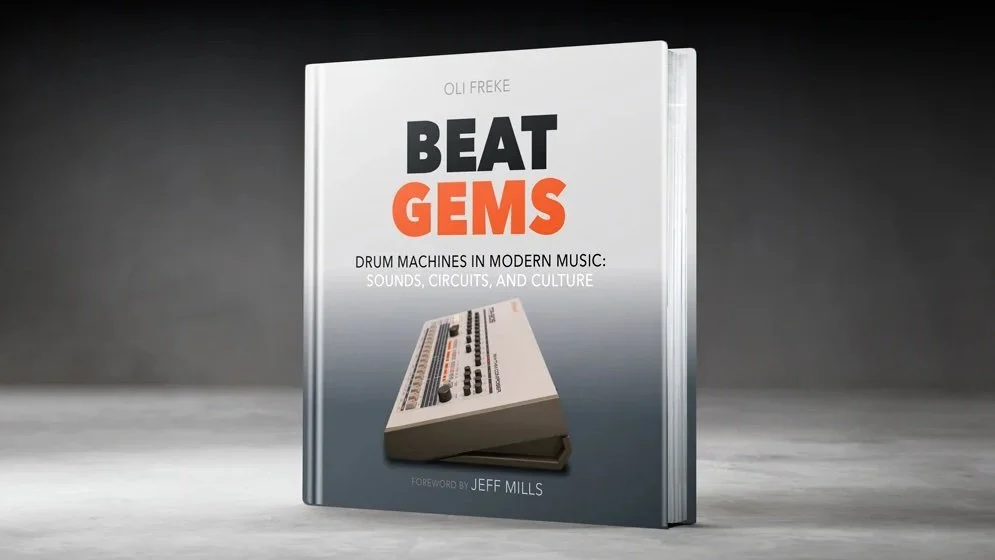
BEAT GEMS is available to buy, shipping worldwide now: https://bjooks.com/products/beat-gems
Blog entry

*Always* meet your heroes!

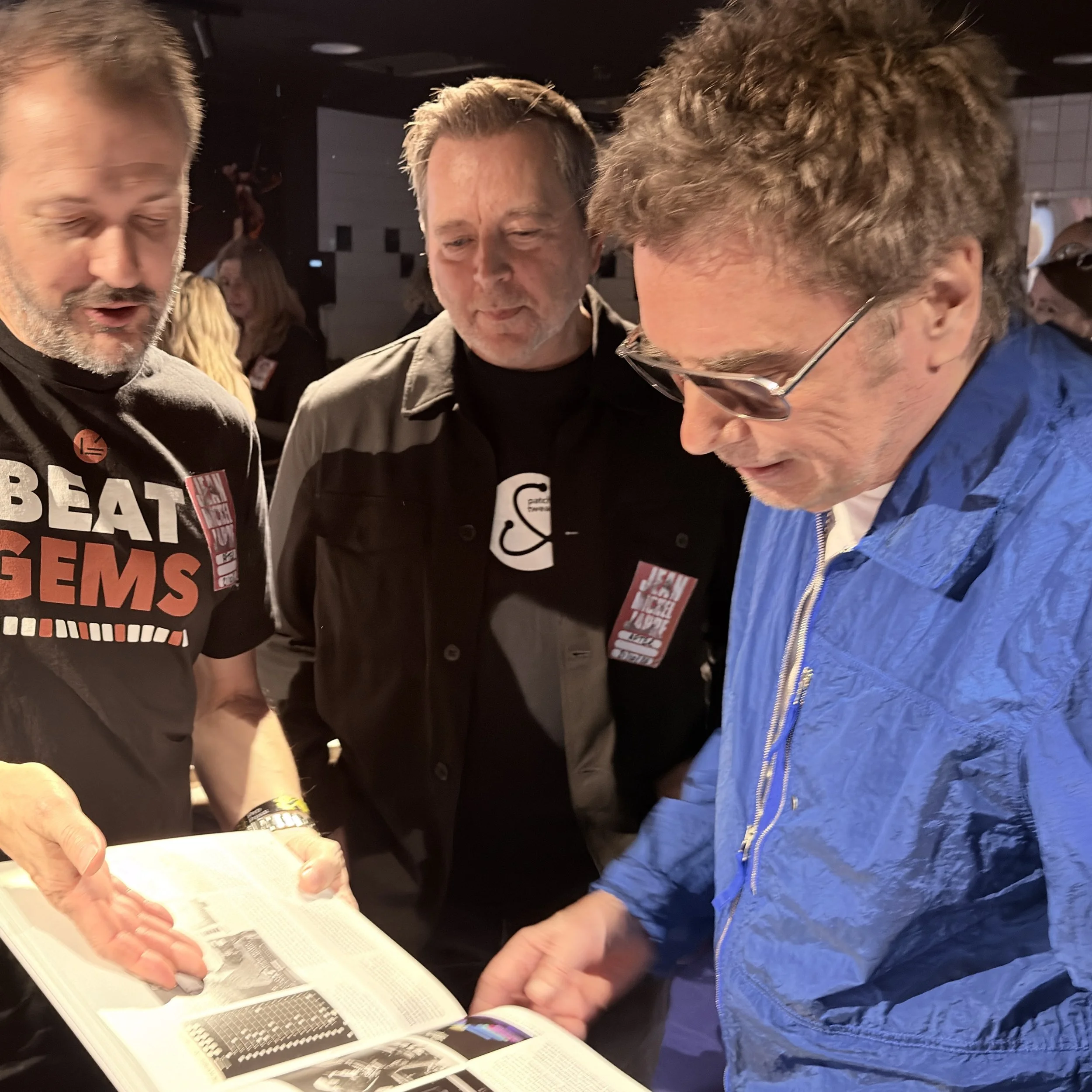
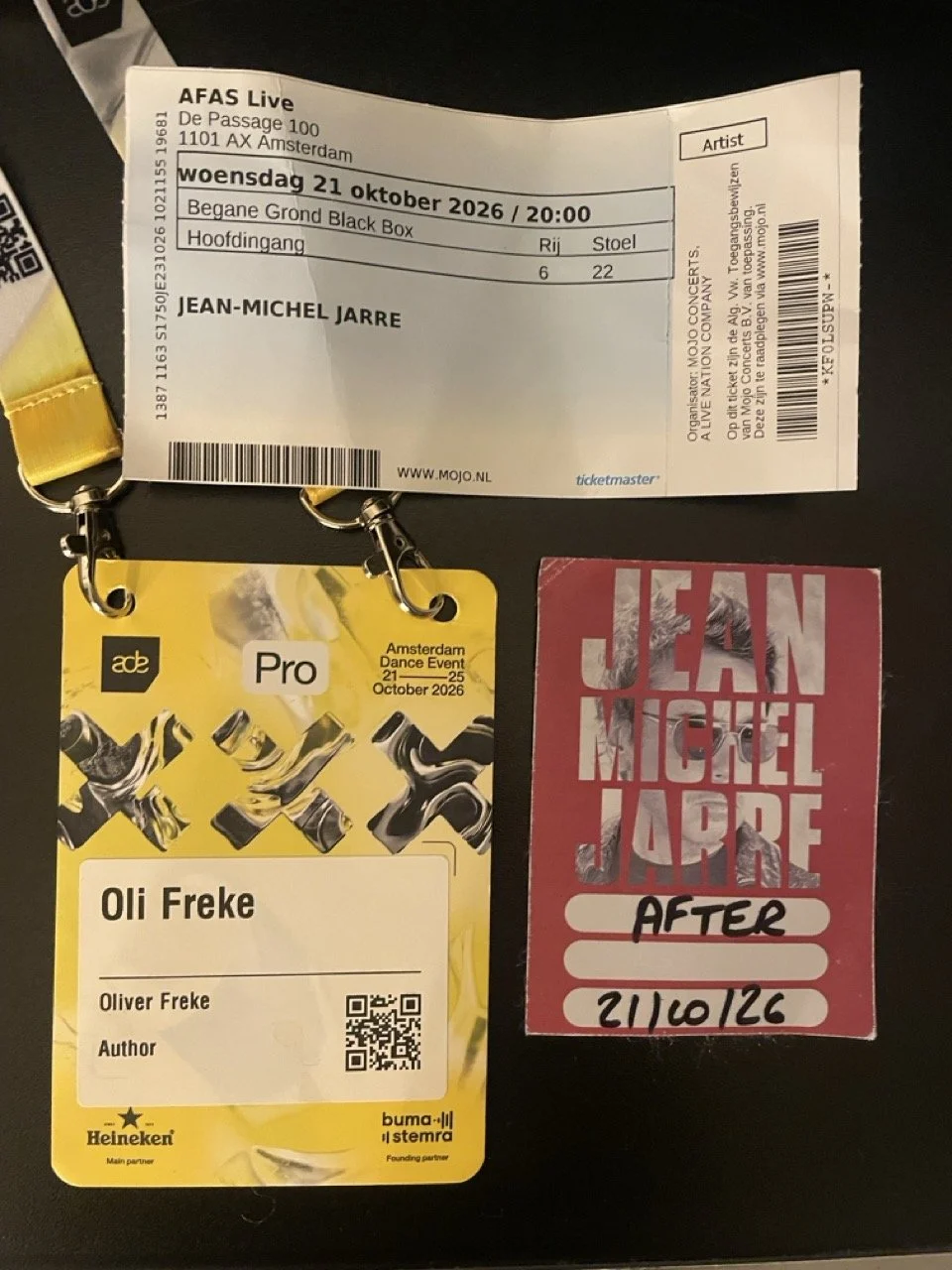
Whilst at ADE, I had the absolute pleasure and privilege of meeting my musical hero, Jean-Michel Jarre. He features several times in BEAT GEMS as a pioneer of electronic music and early user of drum machines in electronic music. (Look up Keio Mini Pops 7, EKO Computerhythm, and Linn LM-1 in the book for more detail).

It’s not every day you meet JMJ and get to show him your new book! An honour.

For the record: it was hearing Equinoxe V as a young boy that turned the electronic lightbulb on in my mind. It connected with me immediately and deeply, and I knew I had make electronic music at that exact moment. So this was a wonderful meeting for me - thanks to Jarre and team for the opportunity.

The meeting followed a great show at AFAS Live, here are a couple of clips.

Very short clips - but it was a wonderful concert. This was first time I’d actually seen JMJ live since Docklands 1988!!! It was worth the wait!

Blog entry

ADE & SynthFestUK

It’s been a furiously busy, but wonderful, week for me as BEAT GEMS is now fully available! Order Here
First up was A.D.E. in Amsterdam, then SynthFestUK in Sheffield…read on for the highlights!

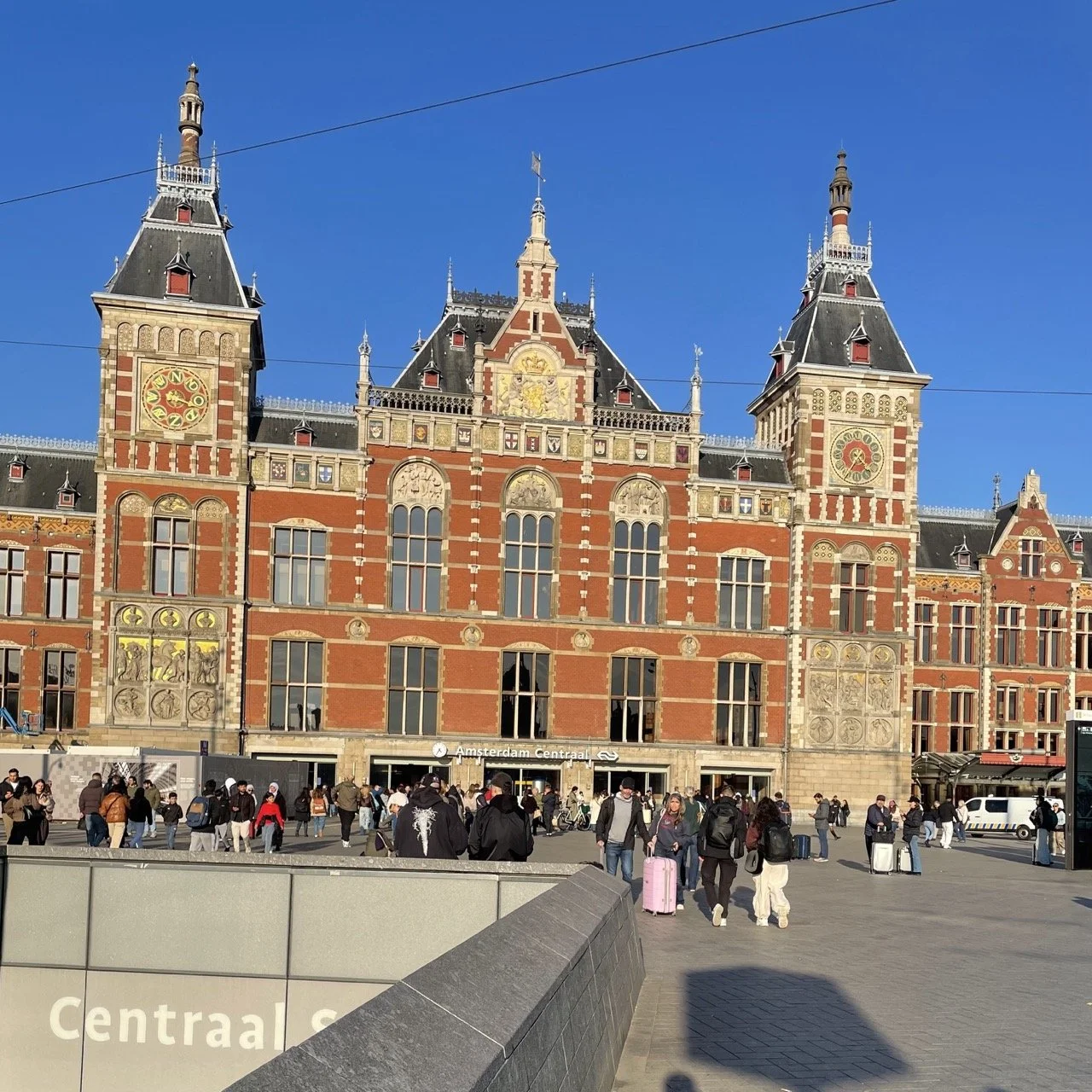
Arriving at the splendid Amsterdam Eurostar terminal. Beautiful station.

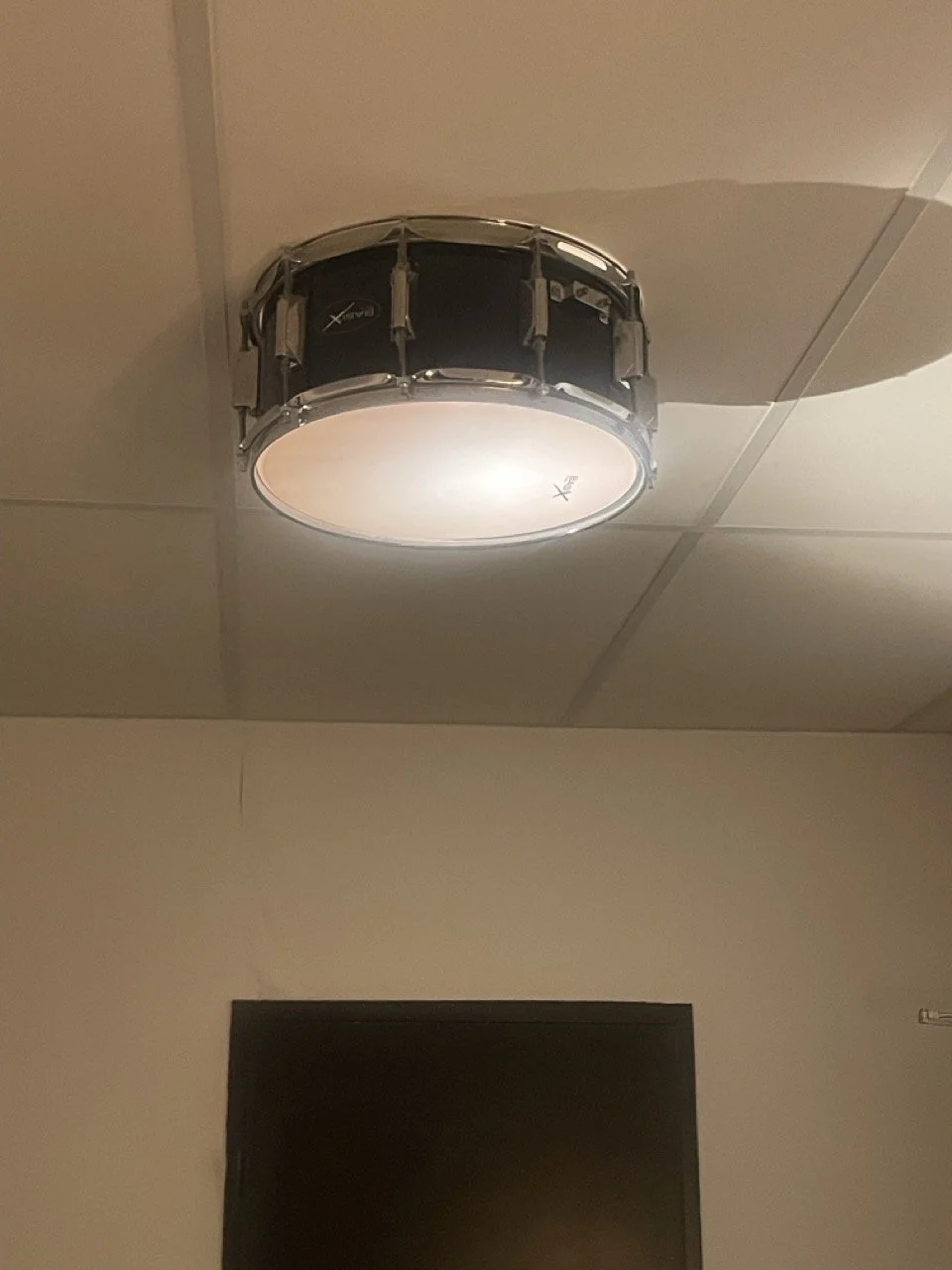
The Backstage Hotel is almost over-themed with music stuff everywhere, including a snare drum on the ceiling…appropriate for my ADE talk on the history of drum machines on Wednesday though!

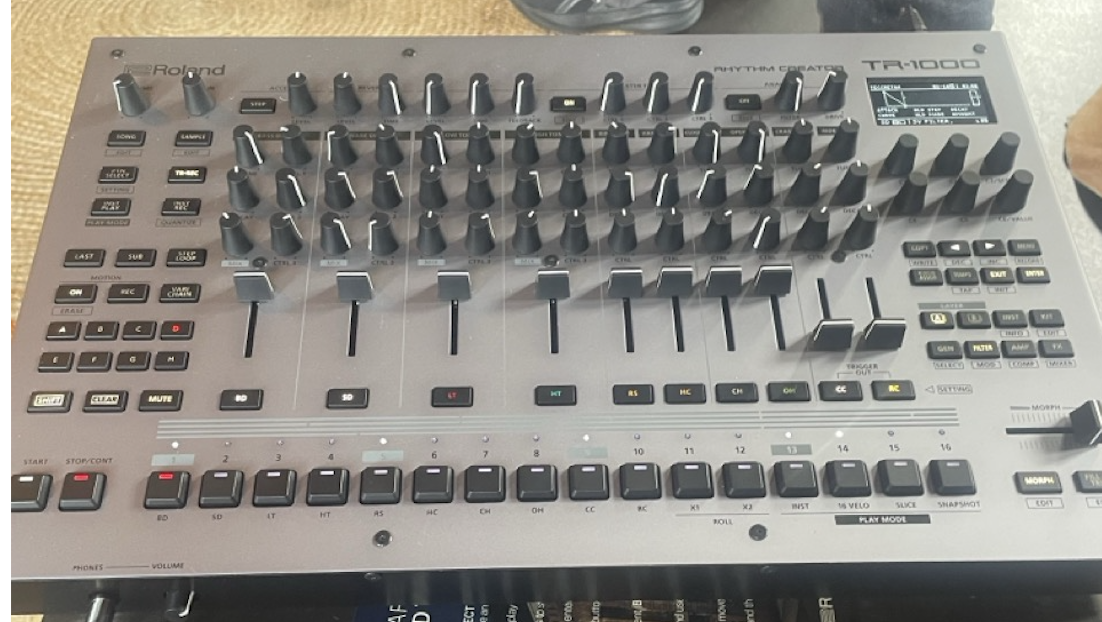
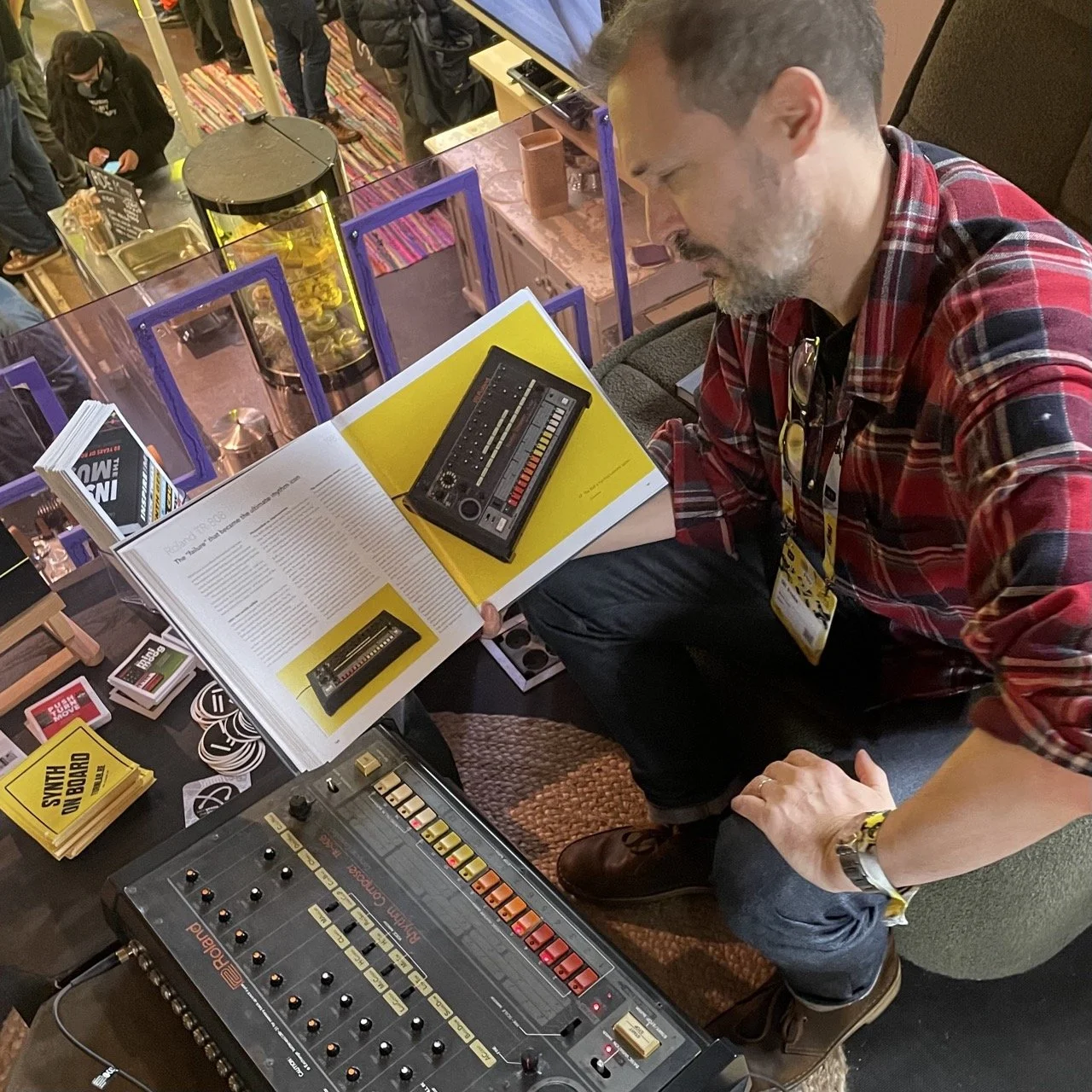
We in Bjooks were right by the Roland stand, so I got hands-on with the TR-1000. A solid piece of kit and no mistake. Not ‘highly intuitive’ - I got the hang of it, but had to turn it off and on again to start at a sensible place! (Demo units are often left in a right state by other users!).

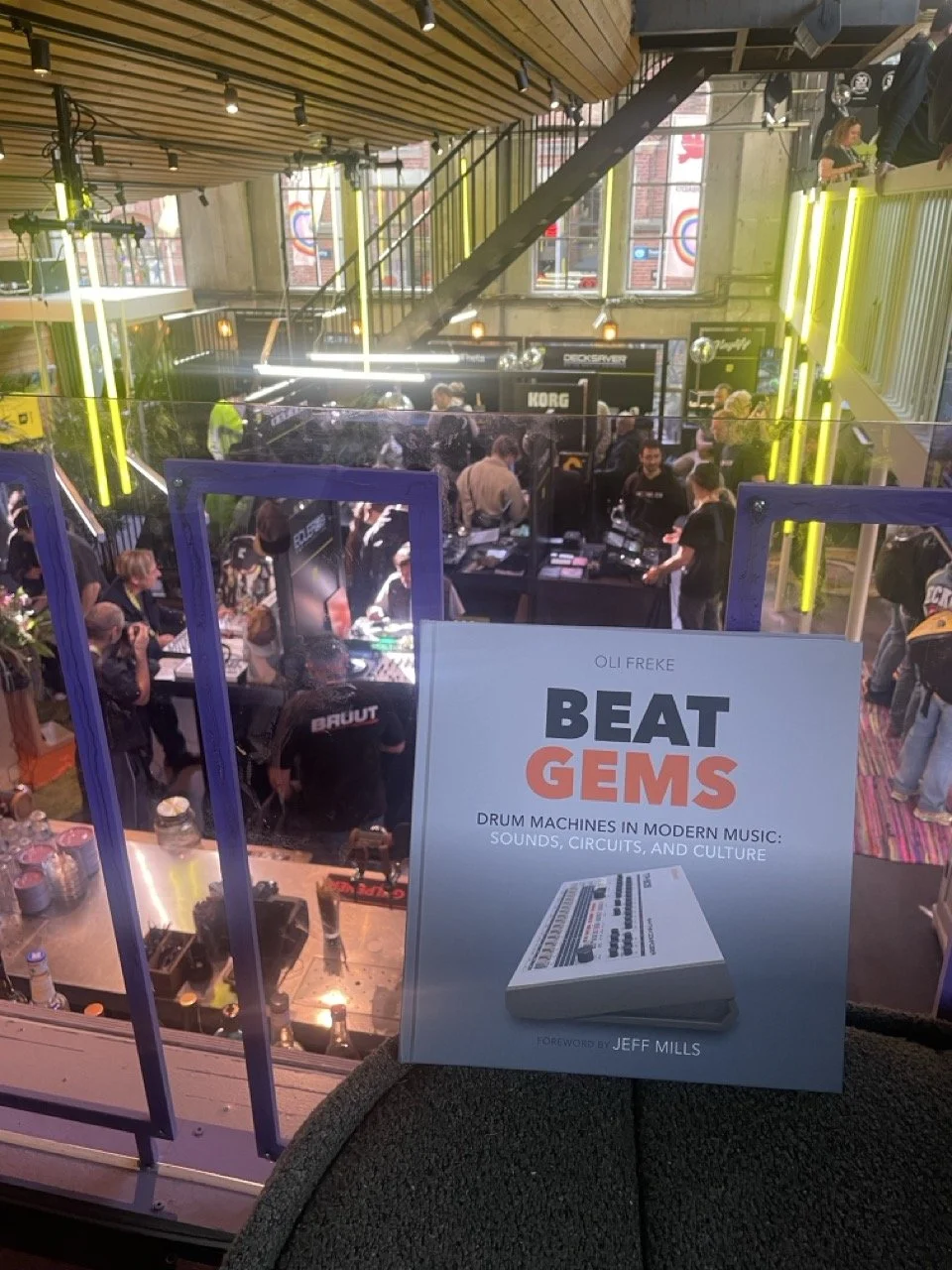
But of course, this was about promoting BEAT GEMS…BEAT GEMS on tour, as it were!

Was a lot of fun hanging out with the Erica Synths / Bullfrog / Geek Punks crew. I really enjoyed the Bullfrog - I actually think it’s ‘friendly’ appearance with primary colours almost does it a disservice: it’s a powerful machine, that’s also huge fun to play with. Highly recommend!

Turnlab.be were kind enough to lend some machines to entice people to our Bjooks stand. Here’s me checking that I got my 808 facts right! (Observation: for a machine that has no ‘shuffle’ feature, the 808 is a hugely funky machine. How did they do that? Read BEAT GEMS to find out!)

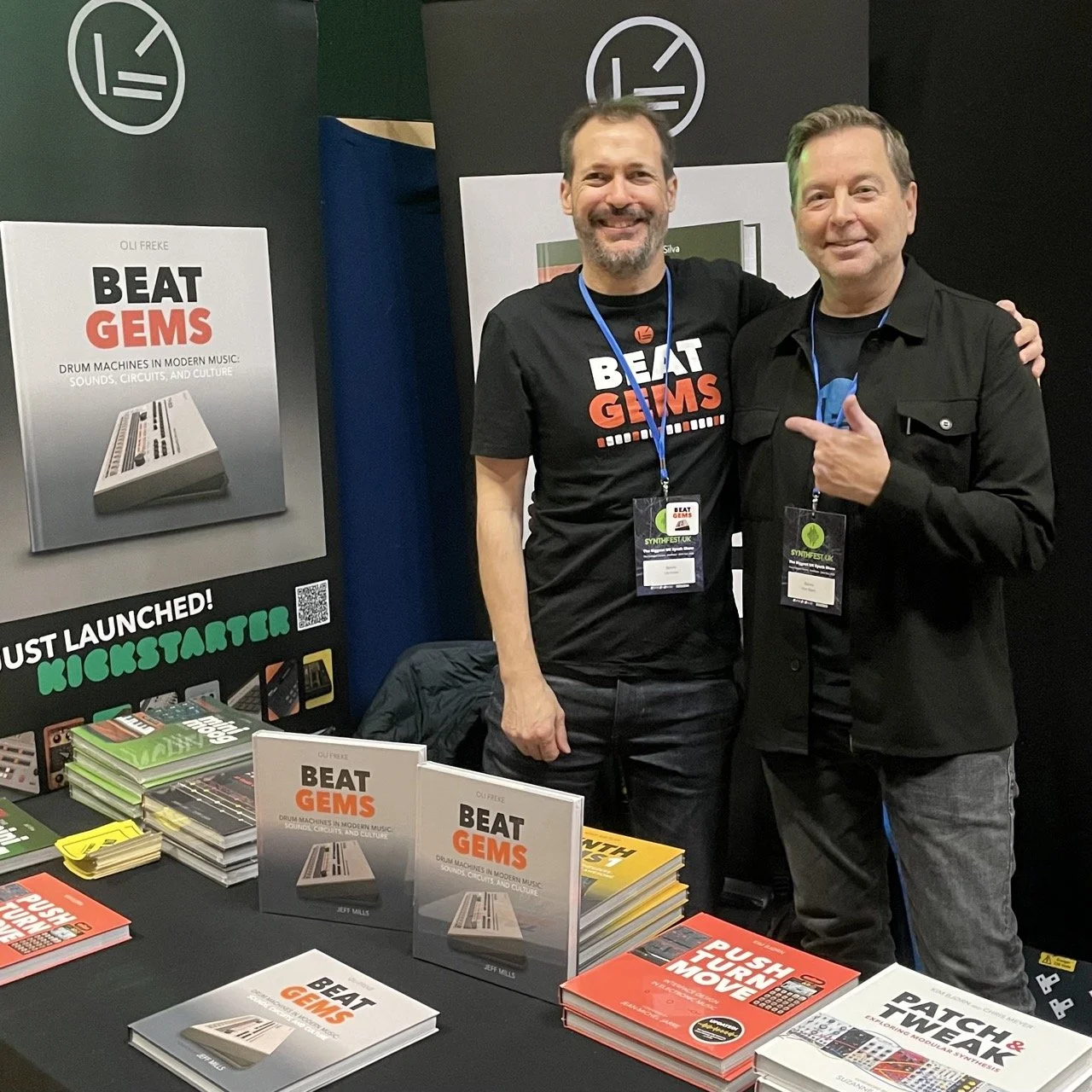
Two days later, we were in Sheffield for SynthFestUK 2026. Pictured is Kim Björn of Bjooks - a more wonderful publisher an author couldn’t ask for!

Blog entry

Pre-Order BEAT GEMS - foreword by JEFF MILLS

Update: Shipping now to Europe & USA & Worldwide!

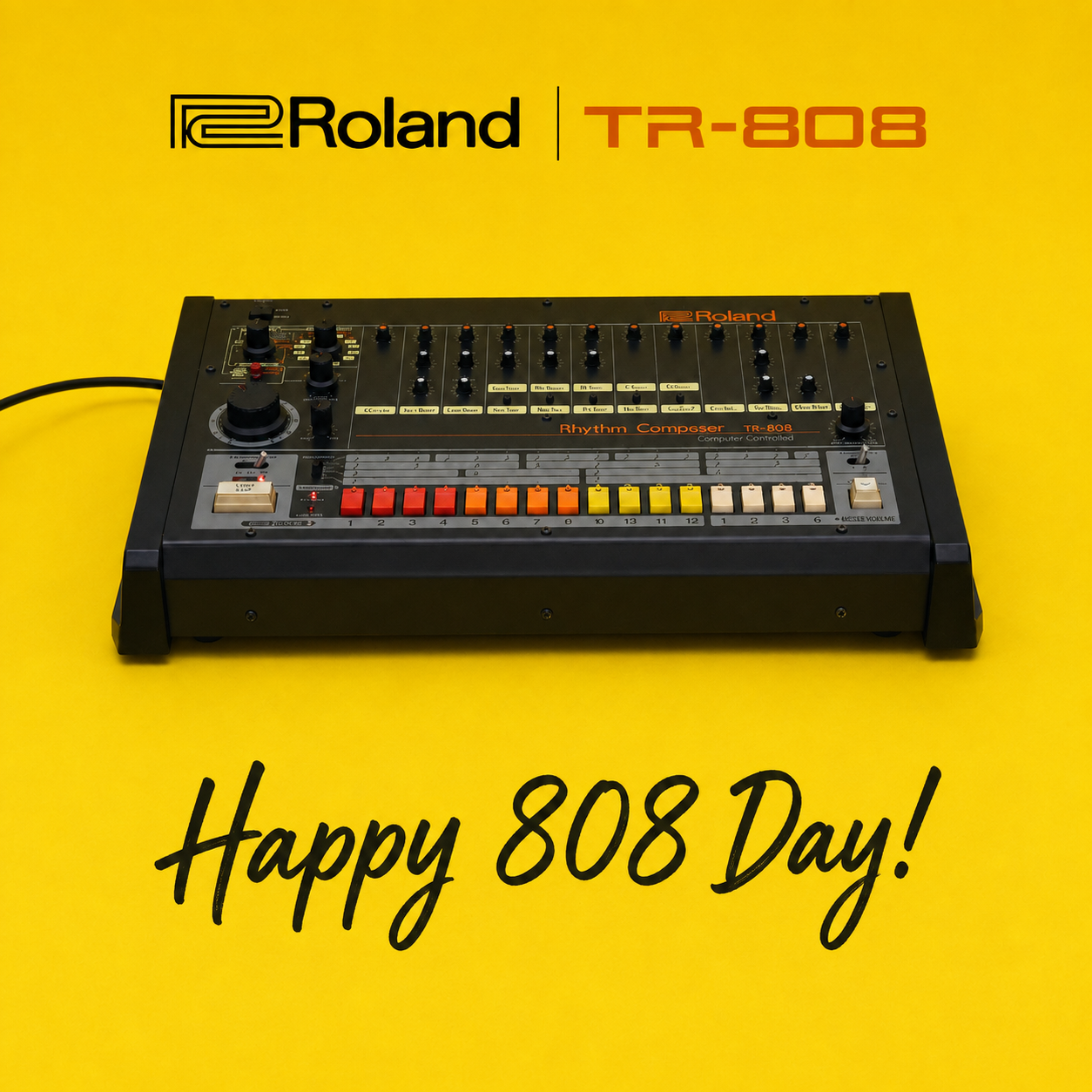
808 Day is the perfect day to confirm that the foreword to my forthcoming book, BEAT GEMS, is to be written by none other than techno legend and Underground Resistance founder, Jeff Mills. A real honour, needless to say. He’s written a lovely piece about his relationship to music, rhythm, drum machines, and - of course - the 909!

BEAT GEMS is to launch very soon, in autumn 2026, but you can pre-order your copy right now!

PRE-ORDER BEAT GEMS FROM BJOOKS!

Blog entry

Guesting on The Digital Lifestyle Podcast

I had a great chat with Ian Dixon of #thedigitallifestyle last week. We chatted about loads of exciting drum machine related stuff, and I give a little demo of the legendary Oberheim DX.

Pop over to YouTube, or just watch below!

Blog entry

BEAT GEMS - my new drum machine book is now live on Kickstarter!

I’m super proud to announce my new book, BEAT GEMS, due to be published in October has gone live on Kickstarter! It’s to be published by Bjooks, who specialise in beautiful books about electronic music instruments. (The earlier Synth Gems Vol. 1 could be considered the ‘partner’ book for Beat Gems!)

https://www.kickstarter.com/projects/bjooks/beat-gems-drum-machines-in-modern-music

It was announced at Superbooth 2026, and reached its funding goal in only five hours! But don’t worry if you haven’t already signed up - there’s plenty of early bird offers still on offer!

The book is a serious and deep dive into the sixty year history of drum machines. Backed up by gorgeous photography that Bjooks are famous for, we tell the story of over sixty crucial, music-changing, innovative and fascinating instruments, plus covering dozens more to support the narrative.

Beat Gems by Oli Freke, published by Bjooks. Article Example 1.
Beat Gems by Oli Freke, published by Bjooks. Article Example 2
Beat Gems by Oli Freke, published by Bjooks. Article Example 3
Beat Gems by Oli Freke, published by Bjooks. Article Example 4
Artists and their drum machines

Above is just a small selection of the inspirational artists who used drum machines prominently in their work - and helped shape the sound of modern music.

Blog entry

Podcast with Ian at The Digital Lifestyle

I had a very enjoyable conversation this week with Ian Dixon of The Digital Lifestyle. As I’m currently researching and writing a book about vintage drum machines, it was a great opportunity to discuss and demo them. They are all quite different, and whilst not the big-name classics like the 808 or 909, still illustrate the fascinating evolution of these important devices.

Units covered are the: Keio Mini Pops Junior (1972), Boss DR-55 (1980), Roland TR-606 (1982), Korg DDM-110 (1985), Yamaha RX17 (1987).

THE DIGITAL LIFESTYLe PODCAST WITH OLI FREKE

https://thedigitallifestyle.com/w/2025/10/the-drum-machines-that-changed-music-forever-with-oli-freke/

Blog entry

SUPERBOOTH 2025 - REPORT IN BRIEF!

Had a splendid time at Superbooth 2025 - inexplicably my first time, but glad to have made it there now to enjoy the vibes - and the synths. 

As ever, the best bit is talking with people, catching up with friends and finding out more about the synths, modules and audio machines of all types direct from the makers/designers/manufacturers themselves. But having access to so many keyboards in one place is also a rare occurrence, so obviously one needs to try and play as many different synths as possible!  I also tried to take a pic of everything I played on - which was made ‘a little' harder by my phone dying about an hour in on the first day I was there...

Regardless - here are all the pictures I did take! 

Moog MiniMoog Red Edition! 

Minimoog innit..always a pleasure to play :-)

Non-Linear Labs C15

One of the classiest instruments there. Lovely keyboard to play and great sounds.

Yamaha Montage M7 

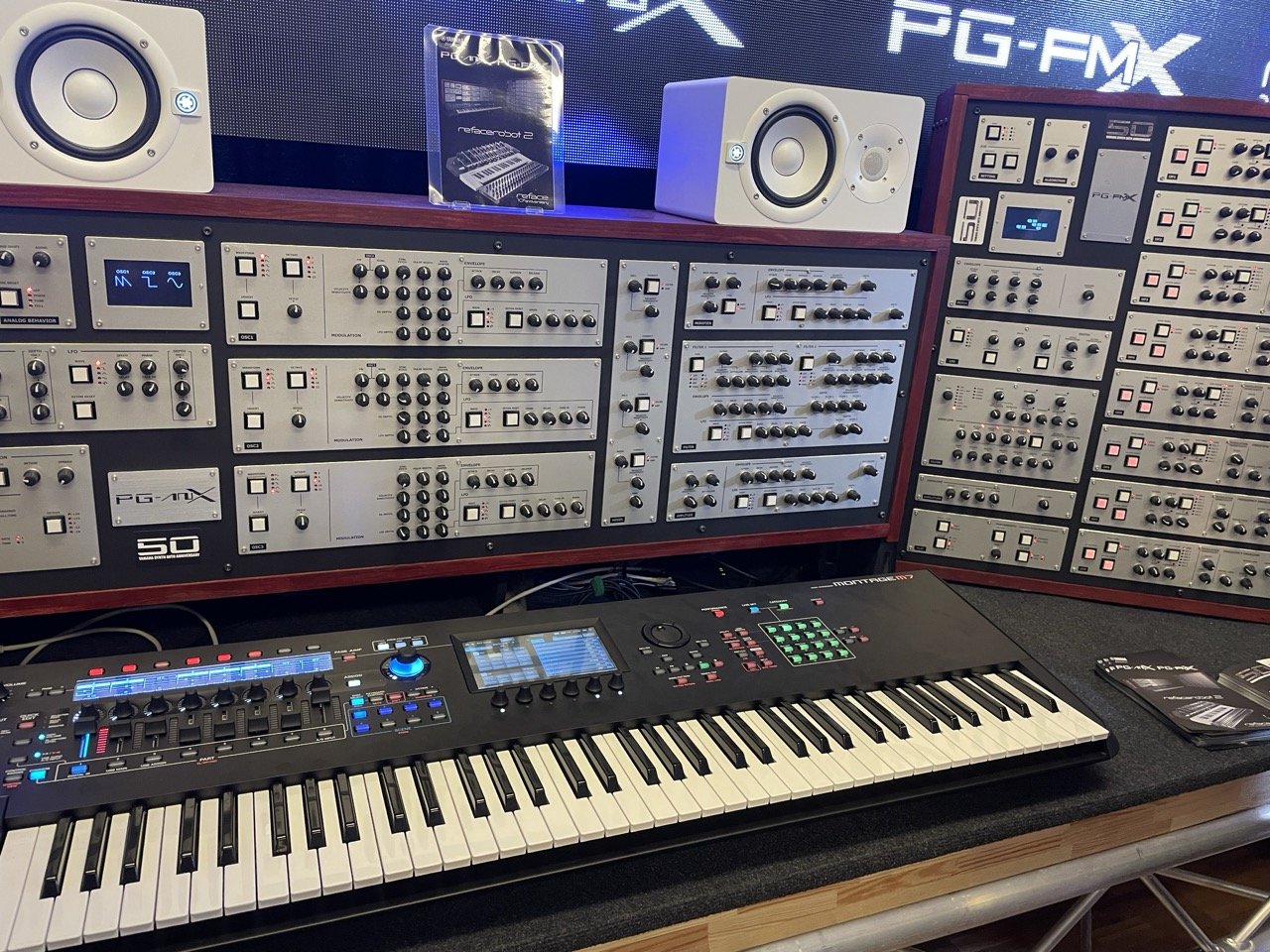
Amazing retro modular-styled control panels for all parameters. Didn’t get a chance to find out if this actually makes it easier to sound design with (looks like rather a lot of reaching for things quite far away), but if you’re gonna map out all controls for a digital synth, you may as well do it properly!

Auto-fader hackday project

Someone at Yamaha clearly had fun hooking up some sliders to Actuators and software to made a perpetually evolving sonic artefact!

Berlin University Modular synthesizer (1980s)

Created by the university in the 1980s.

The Subharchord

An extraordinary valve based machine from 1962, made in the GDR. Apparently banned by the authorities who clearly saw it as threat to the stability of Communism. (Accurately, as it turned out, this thing’s bass frequencies brought about the collapse of the Soviet Union a mere 25 years later!). 

More seriously though, it uses the principles of sub-harmonics to create tonal frequencies. Something I need actually understand in a bit more detail. Moog’s recent SubHarmonicon uses similar principles. Apparently the red knobs and dials were originally white, but have gracefully all turned the same shade of red over the years. 

What does it sound like? Oh terrible! :-) Or at least, it’s a very raw organ-like tone, that lacks any modern sense of fidelity or smoothness. But that’s not a bad thing. Open your ears to its quite unqiue tone and you’ll be fine!

The four knobs in the bottom row on the left control harmonics, and actually, you can get reasonable tones. The bottom row of switches directly above the keyboard are notch filters from low to high; so quite radical harmonic interventions can be made. It is quite a remarkable thing!

Publison DHM-88 & KB-2000

In the same room as the SubHarchord (Berlin Synthesizer Museum), there was also the very rare Digital Delay Line / Sampler system made by Publison in the early 1980s. Like other DDLs, the captured ’sample’ can be manipulated in a sampler-like way. However the Publison goes quite a lot further with the ability to trigger loops in different places, to change pitch of repeats, with total feedback, and many other interesting and novel controls. Check out Robert Henke’s Pitchloop-88 for a Max-For-Live recreation. 

Oberheim DMX - software version

This was the closest I got to vintage drum machine. There’s reason I’m very interested in vintage drum machines. All will be revealed in due course!

Erica Synths Hex Drums

The long awaited Erica Synths re-relased of Hex Investors drum box. 

Sounds bloody great! (And an effects box that was hooked up to it)

Melborne DELIA

The one with the motorised parameter pots, so with each patch load, all the knobs automatically rotate to the correct setting. Despite that seeming to be a bit of gimmick, I don’t mind as it actually sounds fantastic (and the morphing between two sounds pot is great)

Alesis Andromeda 6

Great to play on one of these at last. Sounds as fat and lush as it looks it should. 

Sequential Circuits Prophet 10

The new Prophet 10 innit. 

Korg Wavestate

I am really drawn to the sound of wavetable synths, and I love the sound of Korg’s Wavestate. 

Janko Project (Hooked up to an Arturia Polybrute)

Like an exploding hallucination of a bad generative AI keyboard, the Janko is a valiant attempt to re-imagine the piano keyboard. Attempting to solve for the ‘problem’ that on a piano some white notes are a tone apart and others a semi-tone. (Not something I’ve ever had a particular issue with). An upselling point is that chord shapes remain the same in every key. Again, not something I’ve thought to be a huge issue before. 

It was easier to play than I thought though, and the different levels of each key are usefully placed. But, they are quite narrow and if I tried to play fast, my fingers just slipped off the keys all the time. So…like other valiant attempts to redesign the piano keyboard (or the querty keyboard, come to that), the current system is simply too ingrained in our fingers to change now, imo. 

Waldorf Iridium

A nice sounding modern box; didn’t play for long enough to get a real sense of its personality.. 

Schmidt 8-Voice

Now we’re talking. Sounds as extraordinary as it looks. Huge sound, every modulation option imaginable is possible; so much to learn, yet laid out in a reasonably straightforward way so I reckon you could find your way round without too much bother, and a bit of concentrated effort.

Yamaha Reface

I liked the idea of a knob-based control system for FM, but unfortunately the system didn’t seem to be working properly today.

PPG Synthesizer 1002

I did have a go on this, but it’s unconventional and I didn’t manage to figure it out before the next guy’s turn. It’s not not your standard VCO > VCF > ADSR set-up, that’s for sure! But I’d need a bit more convincing before parting with £10k!

Walforf Quantum - Big sounding synth; I’m afraid I didn’t do much more than step through presets, and of course they all sounded great. 


Conspicuous by THEIR Absence Award Goes To…

Don’t know enough about their corporate strategy to explain their absence. (Do they usually come to Superbooth?


Other things I played but didn’t photograph:

Korg Mini-700s - A fun and quirky monosynth (hi Rafael!)

Korg Kronos - perfect for the jobbing composer who just needs the range of a modern M1. This wasn’t in headphones so I had to deploy my best Bach, Beethoven, Chameleon and Golden Brown renditions for public consumption. A good way to address my recurring dream of performing in public, but forgetting all the notes! (I remembered most of them). 

Novation Bass Station II - perfectible serviceable mono-synth

Sequential Prophet-6 - lush and sophisticated, as you know. 

Instruo Seashell Module - Wild little unit! Lots of FM / Ring mod / Hard-sync sounds at the drop of a hat (or knob)

Modal Systems Cobalt 8 / Argon 8 / Carbon 8 - I really like the sound of these; the sound world aligns really well with my taste for interesting harmonic content in sound

Moog Messenger - NICE. Particularly liked the ‘bass compensation’ knob for hi-resonant filter settings. Clever. 

Moog Muse - LUSH. 

Cong Burn Strokes (with Plaits inside). I already own this so was nice to meet the developer behind it. 

Clank - Won ’Star of the Show’. A very innovative interface and approach to sound design. Intriguing and would need much more time to understand its possibilities. 

UDO Super 6. Bloody love this. Sounds amazing. UK brand too! 

WMD - new module Skorpion. Super-powerful wave folder. Nice tricks like LFO control of wave-fold parameters to keep the sound active and alive. 

BASTL - tiny units sample thingy. Couldn’t really get the hang of it. It’s difficult to grasp Modular sometimes in this kind of environment I think. 

Groove Synthesis 3rd Wave. The one that got away - I would have liked to have tried this one. Pretty sure I would have loved it. 

Audio.Computer Beat.Compute - Interesting semi-preset CR-78 based drum machine. Start with a preset and each instrument has a control to add more notes independently (generated by algorythm). Also a swing control knob (labelled ‘jazz’) and an ‘enthusiasm’ knob. Also three onboard effects like bit-crush and delay, which also interact in interesting way. Would be great for quick backing beats playing live that could be evolved relatively quickly to provide often-much needed variation in ‘live DAWless jam’ situations! 

Korg Physical box thing - set of piezo-connected tines, which can be physically altered with rocks and things put onto them. Charles & I couldn’t quite get the hang of this. But got to see novelty and newness.

Torso Sample ‘Player’

Very nice way of interacting with samples that is more intuitive and immediate that old-school sample editing. It’s cool and fun.

Bjooks - I spent a lot of time with Kim and co on the Bjooks stand admiring their splendid books.


Surgeon Live - Great to see the techno legend live at last!

All in all - I had a fantastic time at my first Superbooth - and fully intend to return next year!

Top tip for next time: Don’t put ‘Superbooth’ into Google Maps without double checking the address. I spent 45 mins getting to a public toilet in east Berlin’s equivalent of Deptford…

Blog entry

Interview with Paulee of Sonic state

This is a great video showing the breadth and depth of the SynthEast 2025 show - and includes a brief chat with me & Paulee discussing Synth Evolution and the two new volumes of Synth Evolution I debuted at the show. (at around 12mins).

Blog entry

Two new volumes of the Synth Evolution A6 Zine series - now available!

I was very proud to launch the two new volumes of the Synth Evolution A6 ‘Zine’ series at this year’s SynthEast 2025 event, organised by Robin Vincent of Molten Media and Electronic Sound magazine!

NEW: Synth Evolution A6 Zine Volume 3: Modern Classics

Modern Classics showcases a selection of the most interesting, impactful, and—arguably—best synthesizers of the past two decades. The synths in this book celebrate the vast range of sonic possibilities now available to musicians and producers. From analogue wonders to extraordinary digital creations, from tightly designed monosynths to open-ended polyphonic beasts, each one is more marvellous than the last!

BUY NOW: velocitypress.uk/product/modern-classics-synths/

NEW Synth Evolution A6 Zine Volume 4: Modular Greats

The modular resurgence of the past 25 years has been a wonder to behold. Where musicians were once chained to their DAWs, we are now liberated once again to wire, patch, and modulate in the real world, choosing from a mind-boggling array of options.

Modular Greats celebrates the fusion of art, logic, science, and serendipity in modular synthesis, highlighting ome of the best-selling, most creative, and most impactful modules of the 21st century. Featured manufacturers include Make Noise, Mutable Instruments, TipTop Audio, Intellijel, Rossum Electro-Music, Doepfer—and many more!

A ‘Desert Island Modular’ section features module choices from scene favourites Robin Vincent, Steve Davis, Panic Girl and more.

https://velocitypress.uk/product/modular-greats/


Talking of SynthEast it was great!

Highlights of the show were:

  • Friday night - a brillant film about Berlin in the 1980s (B Movie) and a fascinatingly fun chat between John Foxx and Adam Buxton about John’s childhood, early art-school experiences and career with Ultravox and beyond. (With a nice shout-out for the Roland CR-78, drum machine fans!)

  • Saturday - exhibition day. Always a blast; met loads of great people and really enjoyed the hourly sets performed by the likes of Gaz Williams, Steve Davis and Paulee Bow.

  • Saturday - evening gigs. Lovely comeback set from SeeFeel (Warp 1990s key band), and support from the lovely modular music of Loula Sharpe.

  • Sunday - Although there is a modular workshop, I didn’t attend that, but it’s great for those wanting to explore and learn more about the world of Eurorack and modular.

A few random snaps below (featuring John Foxx, Rob Puricelli’s beautiful DX1, and my stand with the new ‘merch’, SeeFeel Live, the front garden - and a sexy ReVox PR99 Mk3!

Blog entry

Articles for Sound On Sound!

I need to write more regular blog posts, that’s for sure!

In the meantime, here’s a record of my semi-regular articles for Sound On Sound - the world’s best recording magazine!

Enter the world of alternative tuning systems maybe reinvent music!

A great sounding and innovative dynamic saturation plugin.

Live 12's synth is pretty awesome.

The perfect man-machine symbiosis!

Ableton's granular synth is great - thanks again Mr Henke for this creative tool!

An article on harmonic generation through saturation, distortion and related techniques.

How to bring variety and interest to your music by getting hands on.

Blog entry, Audio

Drum Machine Podcast for Sound On Sound

I’m proud to share with you all my first podcast episode for Sound On Sound on the history of the drum machine:

https://www.soundonsound.com/sound-advice/drum-machine-history-podcast

From the earliest pre-transistor efforts to replicate a drum kit to the latest developments, this is a fascinating story of how this electronic instrument category has influenced musical culture and reflected the technological developments of each era.

I cover early analague drum machines, sampling drum mahines, of course the 808 and 909 - and much (much) else.

Best thing is that there are about 50 audio clips inllustrating the sound of key instruments and songs that used them!

Enjoy!

Blog entry

Musée de la musique, Paris

I was lucky enough to visit the Musée de la musique in Paris recently and of course lapped up the electronic music instrument collection.

In addition, they have five floors of wonderful instruments from the earliest spinnets and harpischords to early woodwind, brass and world instruments of every type. Anyone who’s interested in music would get something from a visit!


An Épinette - from 1522 - very early harpishcord style instrument. The decoration on these early instruments (of which the museum has several, is breathtaking). As we know, the look of our hardware lends an ineffable quality to how we approach the art of music!


A wonderful example of an Ondes Martenot from 1930. Note the mock keyboard - the notes are triggered using the touch-strip above it. Sound is produced using the heterodyne effect - the difference in frequency between two very high frequency vacuum tubes resulting in a tone in the audio range.


Hammond B3 Model A (1935). Laurens Hammond cracked the secret of making a musical insturment from tonewheel technology - rotating disks in a magnetic field to generate waveforms. The technique dates from the late 19th century (in a 200 tonne instrument, the ‘Telharmonium’), but Hammond made the first commercially successful range. Still sounds great to this day!


Moog Modular - 900 series modules (1964) One of Robert Moog’s earliest modular synths based on the 900 series of oscillators, filters and more. A beautiful looking instrument and along with Don Buchla was the earliest to commercialise the new transistor technology in service of music making.


The Syn-Ket (1963). A less well known transistor and valve based synthesizer designed by Paul Ketoff. As early as the earliest Moogs and Buchlas, but wasn’t a commercially available instrument. It might well qualify as the earliest portable synth! This was built for composer John Eaton (who also worked with Robert Moog over a period of several decades on other novel synth control methods).


Moog Percussion Synthesizer (1971). An intriguing drum synth made by Moog, but never released.


EMS VCS3 (1969). British firm Electronic Music Studios (EMS) made the powerful and successful Voltage Controlled Studio No.3 to fund their ground-breaking digital studios in Putney, London. The VCS3 is nick-named ‘The Putney’.


The Gmebaphone (1973). Extraordinary space-age looking ‘spatial processing’ unit from Italy.


Electroacoustic Studio (1950). Pierre Henry’s equipment from the GRM studios, Paris. Worth noting the rivalry between GRM’s tape based ‘musique concrete’ approach and the Cologne studios’ ‘electronic oscillator’ approach. To the extent that Pierre Henry eventually did allow a synth oscillator to be used in his studios, he directed that it should not be used to make music with directly - you were only allowed to record the tones to tape, and then manipulate them…


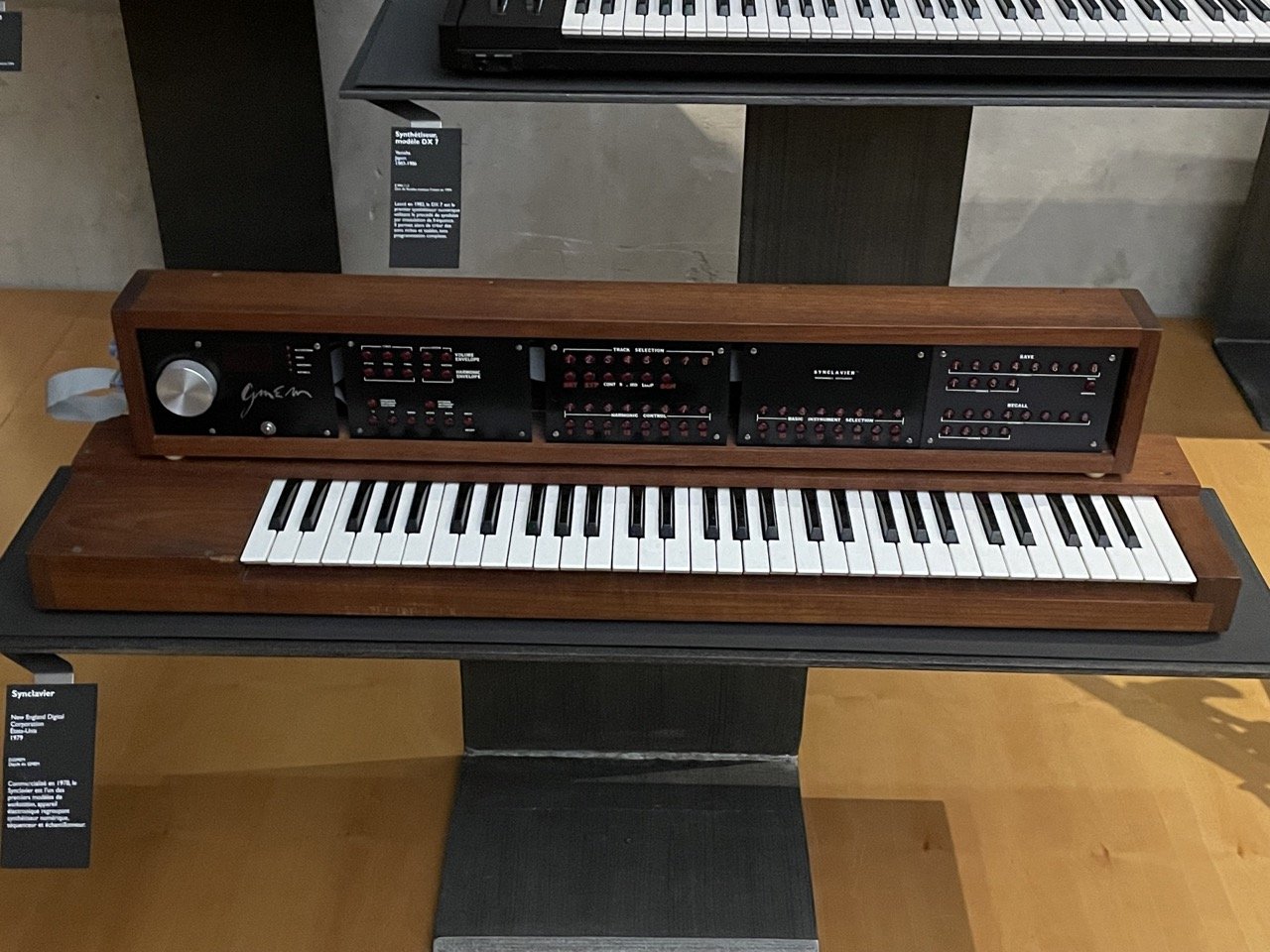
New England Digital Synclavier I (1979). This is the first series Synclavier - when it was ‘merely’ a digital additive synth, not a sampler. I was surprised at how ‘modular’ the units are - screwed in blocks of electronics. The Synclavier II looked much less ‘garage project’!


There are plenty of other lovely instruments - claviolines, ondiolines, theremins, electric violins and other delights. I highly recommend it. There’s nothing like being in the presence of these wonderful instruments. The only shame is that you can’t actually play them…the only downside of these literal ‘museum pieces’!

https://philharmoniedeparis.fr/en/activity/exposition/26625-collection-permanente

Blog entry

Book Launch report - 23rd Nov 2023

My book launch took place on 23rd November, to celebrate the launch of my two new zines - ‘Vintage Synths’ and ‘Drum Machines & Samplers’. Check Velocity Press for online ordering details - or your local book / record shop!


DJ Tom F

DJ Tom F kicked the evening off with a selection of cool electronic synth vibes covering synth based tracks from 90s classics of Underworld and Hardfloor to … modern stuff I didn’t recognise, but liked a great deal!

Oli Freke - Synth Talk

Then I gave a great talk* covering the entire history of synthesizers, samplers and drum machines, with over 70 audio samples in only 40 minutes. *this could come under the category of ‘in my opinion! :-)

Quite a challenge to cover everything I wanted to, and in reality couldn’t cover it all. But was pleased with the reception it got and was great to highlight some of the key moments in synth evolution with the corresponding audio. This is something you can’t do on posters or even in a book!

DJ Rob Vanden

Rob played great sets in between my bits and later in the evening covering some great tunes in the Autonomic and Drum’n’Bass genres.

Next time he promises us a Live Modular set! :-)

Oli Freke - Live Set

Unfortunately I didn’t get any photos or live footage from my actual gig that I played later that evening. I really must remember to ask someone to do that for me next time! But not to worry - the above video is that live performance, one take, with live SH-101 and Moog Prodigy, and plenty of live Ableton loop manipulations.

Is always nice to get the rig out there and playing live, doesn’t happen often enough. (Book me now!)

The visuals I’d prepared, but completely forgot to show on the night; few too many other things to organise and worry about!


It was a great evening and I’d like to say a huge thanks to everyone who came down that night and bought books, talked synth and generally hung out with me and fellow synth fans!


Blog entry

Synth Evolution on BBC National Radio!

A quick humble brag from me to say that I was on BBC 5Live Drive Time last week, as part of their ‘Synthpop September’ celebrations (Synthtember?). I was asked to give a brief history of the synth o

Click the image below to listen!

It’s a very brief interview of only a couple of minutes, but was great to be asked - I do know a thing or two about the synth, after all!

And yes, it was a classic case of I needed to be somewhere that night, so it was done from the back of a cab en route. So very glamorous! (Except I made us late for our destination as we had to pull over for the duration of the interview and a good few minutes beforehand, so both travelling companion and cab driver were pretty cross with me! All worth it in the name of Synth Fact Dissemination!

Me on da radio!

Click to hear me covering synth history in brief!

Blog entry

Can AI replace me?

I wondered if my Synth Evolution project would be under threat if OpenAI & the Dall-E service could generate the beautiful hand-illustrated synth images I make. (Laboriously, and by human hand!).

Luckily it turns out - no, no it can’t.

I used the phrase ‘an outline illustration of a Moog Minimoog synthesizer in black and white’ and this is what we got:

I mean, they’re quite pretty, but if you actually wanted an illustration of a Minimoog, it’s completely useless!

So, think I’m safe for a while!

Blog entry

Chat-GPT because of course...

Well, of course I had to ask Chat GPT to tell me the history of synthesizers from the early hardware machines to the latest digital instruments to see how good and/or accurate it would be.. This is what it said:

“The history of the synthesizer dates back to the early 20th century, when inventors such as Thaddeus Cahill and Leon Theremin developed early electronic instruments. However, it was not until the 1960s that the modern synthesizer began to take shape.

The first true synthesizer was the RCA Mark II Sound Synthesizer, which was built in 1957. It was a massive, room-sized machine that used vacuum tubes to generate sound. However, it was not until the development of the first modular synthesizers in the 1960s that the technology became widely available.

The first modular synthesizers were built by pioneers such as Robert Moog, Don Buchla, and Serge Tcherepnin. These early systems consisted of separate modules that could be connected together to create a custom sound synthesis system. They were typically controlled with patch cords, which were used to route signals between the various modules.

The 1970s saw the rise of polyphonic synthesizers, which were capable of producing multiple notes at once. These instruments used digital technology to store and recall patches, making them much easier to use than the early modular systems. The most famous example of a polyphonic synthesizer from this era is probably the Prophet-5, which was introduced by Sequential Circuits in 1978.

The 1980s saw the introduction of digital synthesizers, which used digital signal processing (DSP) to generate sounds. These instruments were capable of producing a wider range of sounds than their analog counterparts, and they were often more affordable as well. The most famous example of a digital synthesizer from this era is probably the Yamaha DX7, which was introduced in 1983.

In the 1990s and 2000s, synthesizers became increasingly integrated with computer technology. Software synthesizers became popular, allowing musicians to create and manipulate sounds entirely within their computer. However, hardware synthesizers have remained popular as well, with companies such as Roland, Korg, and Mo”
— ChatGPT

And there it ended, mid-’Moog’. The thing seemed to have crashed or frozen, so I’m not sure how much further it would have got.

But, you know, it’s pretty amazing. Nothing there is ‘wrong’ as such. It is indeed a reasonable overview of the history of the synthesizer. If you were a non-expert and wanted a quick ‘Wiki’ style summary, I think you’d have got the gist.

Of course, as synthesizer enthusiasts, we could note that some people consider the Hammond Novachord (1948) the first true synthesizer (but it’s also true the RCA gave us the word synthesizer). And we could point out the synopsis misses the the analogue monosynths of the early 70s, how they were so much more compact and affordable than the great modular beasts of the 1960s.

And very possibly it would have gone on to note the rise of the Eurorack modular scene of the last twenty years as well.

For the full and detailed story I tell in my book, (‘Synthesizer Evolution’, (Velocity Press, 2021)), I’m not so sure it would be possible; or you’d have to ask it so many prompt questions (and fact checking) you may as well write it yourself in the first place.

But as a brief dabble - I’m suitably impressed!

Blog entry, Posters

2022 Round-up

A slightly belated round-up of Synth Evolution activities from 2022. (Had a bit of flu at the end of last year which somewhat knocked me for six, hence the delay.)

Sill, last year was quite productive, now I look back at it - so a big thanks to all Synth Evolution customers whose support, interest and purchases keep me motivated to make and sell the best synth related products I possibly can. I love you all!


POSTERS

  • A refreshed set of colours to my best-selling core product - the Greatest Hits of Synth poster - now in blueprint blue, racing green, alongside re-prints of the black and white versions. I do love the green version! :-)

Synths' Greatest Hits poster - A1 - Green
£35.00

Exactly 99 of the most iconic, important and interesting synthesizers, drum machines and samplers of the 20th century, individually illustrated and brought together in one highly detailed A1 poster.

From the Minimoog, ARP 2600 and Yamaha CS-80 to the Roland TR-808 and TR-909, LinnDrum, Fairlight CMI and Akai S1000, the poster charts some of the machines that shaped electronic music — alongside plenty of more unusual and lesser-known instruments.

Each machine is accompanied by a short description explaining its significance, including stories such as the ARP 2600 being used to create the voice of R2-D2, or the Eminent 310 providing the celebrated string sound used by Jean-Michel Jarre.

There is plenty of technical information too. Each entry shows the instrument's synthesis type, maximum polyphony and number of oscillators per voice where applicable, making the poster as much a reference guide as a piece of wall art.

The result is a densely packed celebration of synthesizer history, designed to reward close inspection and keep synth enthusiasts, electronic musicians and producers occupied for hours.

This edition has a blue background; other colour versions are available in separate listings.

Size: A1 — approximately 59 × 84cm
Features: 99 illustrated synthesizers, drum machines and samplers
Includes: Historical facts, synthesis types, polyphony and oscillator information
Shipping: Worldwide

Featured instruments include:
Ace Tone FR-1, Access Virus, Akai AX80, Akai S1000, Akai S612, ARP 2600, ARP Odyssey, Buchla 100 (The Buchla Box), Buchla Music Easel, Casio VL-1, Casio CZ-101, Casio CT-401, Casio CZ-1, Casio Cosmo ZZ-1, Elka Synthex, E-mu Modular, E-mu Audity, E-mu Emulator, Eko EKOsynth P15, Electronic Dream Plant Wasp, Electronic Dream Plant Gnat, Eminent 310, EML Electrocomp 100, EMS VCS 3 (The Putney), EMS Synthi AKS, Ensoniq ESQ-1, Ensoniq Mirage, Fairlight CMI, Hammond Novachord, Hillwood Blue Comets, Kawai K5, Kawai K1, Korg Mini-Korg 700, Korg PS-3100, Korg MS-20, Korg Mono/Poly, Korg Poly-61, Korg M1, Korg Wavestation, Korg Prophecy, Korg Mini-Pops, Kurzweil K1000, Linn LinnDrum, Moog Modular, Moog Synthesizer 3C, Moog Minimoog, Moog System 35, Moog Polymoog, Moog Prodigy, Moog Memorymoog, Multivox MX-75, NED Synclavier, Clavia Nord Lead, Novation Bass Station, Novation Supernova, Oberheim SEM, Oberheim Two Voice, Oberheim Eight Voice, Oberheim OB-X, Oberheim OB-8, Octave The Cat, Octave The Kitten, Oxford Synthesizer Company OSCar, PPG 1003, PPG Wave 2.0, RMI Harmonic Synthesizer, Roland SH-1000, Roland SH-3A, Roland System 100, Roland System 100M, Roland Jupiter-8, Roland SH-101, Roland TB-303, Roland Juno-106, Roland Alpha Juno 1, Roland D-50, Roland JD-800, Roland TR-909, Roland TR-808, Roland CR-78, Sequential Circuits Prophet-5, Sequential Circuits Pro-One, Sequential Circuits Prophet-600, Serge Tcherepnin Modular Synthesizer, Steiner-Parker Synthasystem, Teisco 100F, Waldorf Microwave, Yamaha GX-1, Yamaha CS-80, Yamaha DX1, Yamaha DX7, Yamaha GS1, Yamaha SY77, Yamaha VL1

  • I was hugely honoured to be asked by the Alan R Pearlman Foundation to design the 50th Anniversary poster for the beyond-legendary ARP Odyssey. I was only too happy to oblige, basing this design on a vintage advert, but updating it with some great quotes from selected artists, musicians and producers declaring their love this instrument. A lovely project to work on and resulting in a splendid celebration of this classic synth:

ARP Odyssey 50th Anniversary Poster
£30.00

North American and Canadian customers can pay less shipping costs by visitng the Alan R.Pearlman website and ordering there:

alanrpearlmanfoundation.org/product/arp-odyssey-freke-poster/

UK & European customers will pay less shipping ordering here on the Synth Evolution website.

Commissioned by the Alan R. Pearlman Foundation, this 18x24” poster celebrates 50 years of the ARP Odyssey (1972). Following their semi-modular synth in the previous year, 1971 (the Model 2600), the Odyssey was a fully integrated monosynth and won a huge following of artists too long to list - but iconic players included Herbie Hancock, Gary Numan, Kraftwerk and many, many more.

This poster is a twist on the marketing materials of the original, but instead of featuring a list of features, each link quotes the most famous artists in their praise for the synth.

  • I branched out into posters featuring a single synth for the fans of any one particular synth. Available in A4/A3 sizes or as digital downloads, I can produce these to order to feature any of the 500 or so synths I have illustrations for!


T-SHIRTS

  • Following 2021’s highly successful and enjoyable ‘World Cup of Synths’ collaboration with ‘We Are 1 of 100 T-shirts’, I approached them with a new idea focussing on synth oscillators. I think we came up with super-cool designs celebrating both the synths themselves in a novel and - splendidly nerdish way!

  • Did I mention we got a cease and desist from Moog Music by not thinking through the implications of using the Moog logo? Whoops! Luckily we got permission from the ARP Foundation to use the logo on this glorious artifact below:

  • https://weare1of100.co.uk/clothing/all-t-shirts/t-shirts/oscillator-champion-2022-oli-freke/


Calendar

  • Following of from the collaboration with the Alan R Pearlman Foundation with the Odyssey’s 50th Anniversary poster, it was great to see the illustration used in their 2023 Calendar - available to purcahse right now for the year ahead…


SYNTHfest uk

The first in-person SynthFestUK since lockdown took place in October 2022 and it was wonderful to catch up with old friends and make new ones after a two year hiatus. As ever Synth Evolution hosted a stand and sold plenty of books, posters, mugs and t-shirts. Thanks to all those customers and it was great to chat with everyone there, customer or not. I was able to slip away to see Paul Wiffen’s splendid talk featuring the Elka Synthex (Jarre’s laser harp) and the E-Mu 50th anniversary talk by Tony Wride of Exclusively Analogue.

Synth Evolution stand at SynthFestUK 2022


synthtrax.net

  • I created a Wiki site to log all the verifiable uses of synths in every track ever made. Yes, that was a bit crazy ambitious, but it’s up and running and I had some enjoyable research sessions fleshing out the Moog Minimoog, ARP 2600, Roland Jupiter 8, and many more. Check it out, and help out - it’s an open Wiki and I would welcome any dedicated collaborators :-)

  • www.synthtrax.net


Music

As well as all the Synth Evolution products and activities, I also produce electronic music with synths (unsurprisingly!) In 2022 I released three techno EPs which I think get the balance right between hardness, funk, groove, melody, arrangement and is in-keeping with the genre’s heritage. Well, I would say that of course, wouldn’t I?


2023

So, what about 2023 then? Well, all things being equal, it’d be great to create a new poster or two. I haven’t really thought what that could be yet, but I’m sure it will be some combination of hand-illustrated vintage synthesizers combined with a view of their place in musical and tech history.! I’d also love to follow up 2020’s Synth Evolution book, and I have some ideas that could similarly grab the imagination of synth fans everywhere. And of course, bang out some more banging techno! Hopefully get to do some PAs too…watch all these spaces, and more!

Blog entry

New T-shirts Available! Champion Oscillators!

'The results are in! The synth community have spoken and pronounced the ARP 2600 as their favourite oscillator! Second and third place were extremely close - The Roland SH-101 and Moog Minimoog only differing by two votes, but the SH-101 just nudges it. 

Order your favourite(s) now from WeAre1of100 T-Shirts:

Buy Now!

Thanks to everyone who took part, debated the options and their merits - it was a lot of fun to watch the vote unfold. And because it was so close... we're offering the top three to pre-order!

Completing the vote ranking, the Roland Jupiter 8 was in fourth place, and Yamaha DX7 closed it out in fifth. A commentary on the enduring popularity of vintage analogue compared with still-hard-to-program digital FM synthesis, perhaps? 

So, the screen-printing presses will roar into action after pre-orders close in around 7 days for these triumphant designs.

Stay tuned! (oscillator puns for the win!)

Blog entry, Competition

Champion Oscillator T-shirt Comp - you decide!

One lucky entrant will win one of the latest range of t-shirts to be created in Synth Evolution’s latest collaboration with 1of100 T-shirts! But first we have to decide which designs we’re going to make!

Introducing the Champion of Oscillators t-shirt competition!

Go here >> https://twitter.com/weare1of100/status/1569398470389243905 <<

After last year's World Cup of Synth which named the Roland TB-303 the greatest synth of all time comes weare1of100 T-shirts latest collaboration with Synth Evolution: Champion Oscillators Competition.

This time we take a deep dive into the beating heart of any synthesizer - the oscillator.

What is a synth but a sound-generating tool, and what exists in each and every single synth that makes that sound? The oscillator! Over the years there have been analogue oscillators, digital oscillators, FM oscillators and more. Not only are they the sound source, but to enable their control they have been represented in many ways on the front panel, and each of those case designs are miniature works of art in our opinion!

Synth Evolution and 1of100 T-shirts have selected five of the finest synths and created t-shirt designs from the control panels. It's fascinating to see how the design and evolution of synth is reflected by the type of waveforms available and the era of graphic design from which it dates.

There is definite truth to the idea that beauty of form comes from clarity of purpose!

The synths chosen are:

ARP 2600: the earliest synth on the list (1971). The Model 2600 was ARP's breakthrough synth following the limited production run Model 2500. Being a semi-modular synthesizer, each of the three oscillators can be patched to output one of two waveforms - sawtooth and pulse. These can be modulated by four sources, as shown by the four arrows (for Pitch, S/H, Envelope, Oscillator 2). The design is a classic of 1960s’ functional screen-print design, and is replicated three times on the synth itself for each of the three oscillators.

Moog Minimoog: The next classic on the list is the first and greatest monosynth of the 1970s, the Minimoog. Unlike the ARP, it's a fully wired beast (no patch cables here!), so the oscillator selector is a simple rotary dial to enable the choice of waveform. There are six to choose from - which is several more than the usual two or three - and are: Triangle, Tri/saw, Sawtooth, Square, Pulse 1, Pulse 2. Worth noting is that at the heart of each of the Minimoog's three oscillators is a basic sawtooth generator with waveshaping circuits for the different waveforms. it’s also noted for overdriving the filter input giving it its legendary sound. Again the design itself is a simple functional affair, enabling the user to easily select the desired sound.

Roland SH-101: A 1980s take on the monosynth. By now components had miniaturised and were more power efficient -to the extent that the SH-101 could be run from batteries. The SH-101's oscillator design feature Roland's standard graduated faders and this portion of the oscillator features the octave selector (still measured in 'organ pipe’ foot-lengths), the pulse-width selector and pulse-width modulation sources.

Roland Jupiter 8: the first polysynth on the list, the Jupiter 8's oscillators strip things back to the classic selection of triangle, sawtooth, variable pulse and square wave. Cross-modulation from VCO2 can be added, again through use of one of Roland's distinctive faders with the detailed graduations. Each of the eight voices of the Jupiter 8 had the benefit of two oscillators making for a ground-breakingly rich sound that's still sought after today.

Yamaha DX7: Unlike the previous four synths, the DX7 featured the breakthrough digital technology of frequency modulation. The DX7's oscillators don't generate 'analogues' of waveforms, they calculate interactions between multiple of them and are known as 'operators'. As such, each DX7 voice can be made of up to six of these 'operators' and each can modulate the other in various configurations of 'carriers' and 'modulators'. This design shows just one of the 32 configurations (algorithms) that these six operators can be arranged in.

We think any of these designs would make for a great t-shirt, but we can't make all five of them (sadly!). Therefore we invite you to vote for your favourite(s) on Twitter. The top two will then be made into T-shirts for purchase. We can't wait to see which will top the the Oscillators challenge!